How to Choose a Reliable Lawn Mower Manufacturer: A Strategic Guide for Businesses
Selecting the right lawn mower manufacturer is a critical business decision that directly impacts your operational efficiency, product quality, customer satisfaction, and ultimately, your bottom line. Whether you are a professional landscaping contractor in need of durable commercial lawn mowers, a municipal body tasked with maintaining public green spaces, an agricultural manager overseeing large-acreage turf care, or a retailer looking to source high-quality lawn care equipment for resale, partnering with a reliable lawn mower factory sets the foundation for long-term success and competitive advantage. This guide outlines the key strategic factors to consider when evaluating potential manufacturers, moving beyond basic price comparisons to assess true partnership potential—ensuring you align with a partner who can meet your unique needs, uphold consistent standards, and support your business growth.
1. Define Your Needs with Precision: Lay the Groundwork for Success
Before initiating your search for a lawn mower manufacturer, it is essential to crystallize your specific requirements to avoid misalignment and wasted resources. Start by clarifying your core objective: are you sourcing standard commercial walk-behind lawn mowers or zero-turn lawn mowers for resale, or do you need fully customized OEM/ODM lawn mowers tailored to a specific application? Taking the time to map out every detail of your needs will enable you to communicate effectively with potential partners and accurately assess their capability to deliver. Key considerations include:
Application & Use Case: What type of lawn care tasks will the equipment handle? Are you maintaining large-acreage farming lands, precision turf on golf courses, rugged slope areas that require heavy-duty lawn mowers, or compact urban landscapes where small electric lawn mowers are more practical? For example, municipal bodies may need commercial ride-on lawn mowers for park maintenance, while landscaping contractors might prioritize lightweight yet durable walk-behind lawn mowers for residential jobs.
Key Specifications: Outline the non-negotiable technical details, including the required power source (gasoline-powered lawn mowers for high performance, electric lawn mowers for eco-friendliness, or hybrid lawn mowers for versatility), cutting width (ranging from compact 21-inch models to large 60-inch+ commercial units), and special features (such as remote control operation, track systems for uneven terrain, or electric start lawn mowers for convenience). Additionally, note any compliance standards your market requires, such as EPA emissions for the USA (ensuring gasoline lawn mowers meet non-road engine regulations) or CE marking for Europe, which covers safety and performance for lawn care equipment.
Volume & Logistics: Determine your required order quantities—whether you need small-batch orders for niche markets or large-scale production for mass retail. Clarify your preferred shipping terms (FOB, CIF, or DDP) and any specialized logistics needs, such as hazardous goods-compliant packaging for battery-powered lawn mowers (which require proper handling to meet global shipping standards). Also, consider lead time requirements to ensure the manufacturer can align with your inventory or project timelines.
A clear, detailed brief not only streamlines your search but also helps potential manufacturers provide accurate quotes and demonstrate how they can meet your exact lawn mower needs.
2. Evaluate Technical Expertise and Manufacturing Capability: The Backbone of Reliability
A reliable lawn mower manufacturer is defined not just by their ability to produce equipment, but by their technical depth, production integrity, and capacity to adapt to evolving market demands. When assessing manufacturers, dig beyond surface-level claims to evaluate their core capabilities:
In-House R&D Capabilities: Does the manufacturer have a dedicated engineering team with experience in lawn mower design and innovation? The ability to develop new models, adapt existing ones (such as modifying a zero-turn lawn mower for slope use), or integrate new technologies (like battery efficiency upgrades for electric lawn mowers) is crucial for customization and future-proofing your product line. Ask about their R&D process—do they conduct field testing to ensure their commercial lawn mowers perform well in real-world conditions? Manufacturers with strong R&D can also help you address unique challenges, such as creating a custom lawn mower for specialized turf maintenance.
Stringent Quality Control (QC) Processes: Quality is non-negotiable for lawn care equipment, as breakdowns or defects cause costly downtime or dissatisfied customers. Inquire about QC protocols at every production stage: inspecting raw materials (e.g., high-grade steel for lawn mower decks), welding, assembly, and final performance testing. Reliable manufacturers test gasoline lawn mowers for engine performance and electric models for battery life and cutting precision, with documented QC processes including defect rates and corrective actions.
Production Capacity & Lead Time Transparency: Can the manufacturer consistently handle your order volume without compromising quality? For example, if you need 500 commercial ride-on lawn mowers for a seasonal peak, ensure their production lines can meet that demand. Transparency about lead times is a sign of professionalism—avoid manufacturers with vague timelines or overpromises. Also, ask about scaling production as your business grows or adjusting orders (e.g., switching to electric lawn mowers due to market trends).
3. Verify Compliance, Certifications, and Quality Assurance: Non-Negotiable Standards
Certifications and compliance are tangible indicators of a manufacturer’s commitment to quality, safety, and global standards. Skipping this step risks costly delays, fines, or market exclusion. Focus on these key areas:
Product-Specific Certifications: For your target market, ensure the manufacturer provides necessary certifications for your lawn mower models. For the U.S., EPA certification is mandatory for gasoline-powered lawn mowers (regulating non-road engine emissions), with manufacturers required to label engines and provide emission declarations. For Europe, CE marking confirms compliance with safety, health, and environmental standards. Electric lawn mowers may need additional certifications like UL for electrical safety. Request current certification copies to verify validity.
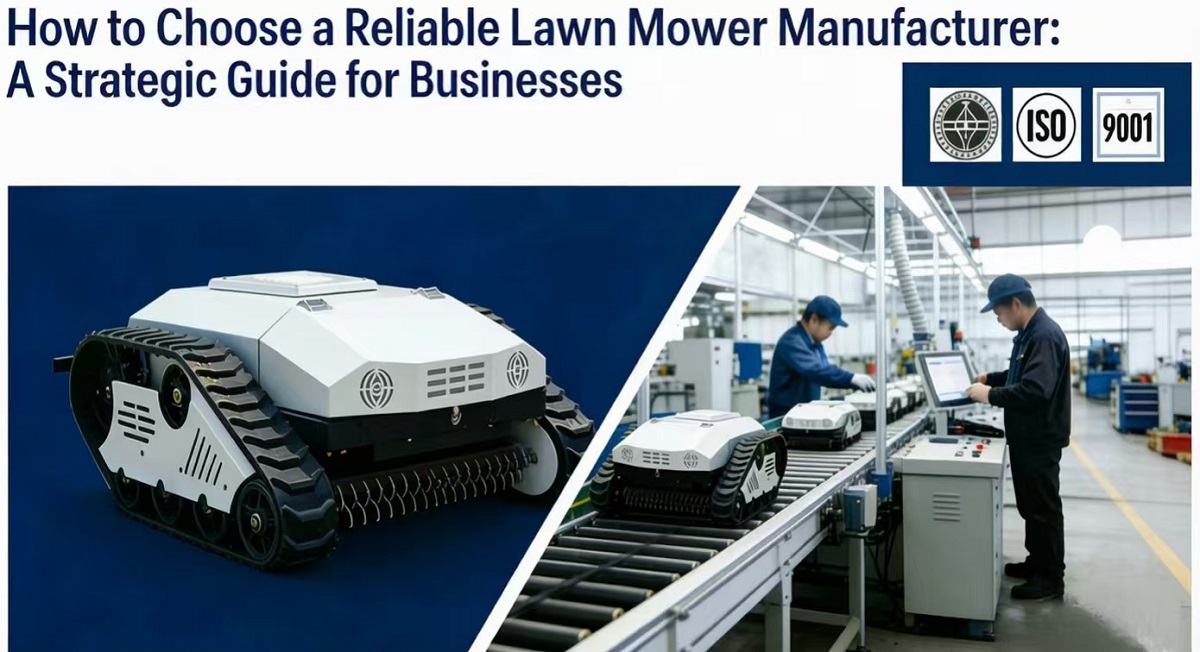
Factory Audits & Management Standards: Manufacturers welcoming or holding international audits (e.g., ISO 9001 for quality management) demonstrate systematic production and QC. Look for adherence to industry-specific standards, such as LY/T 1934-2020 for Chinese ride-on lawn mowers, which outlines technical requirements for gasoline models.
Warranty & After-Sales Support: A clear, fair warranty reflects confidence in lawn mower quality—typically 1-3 years for commercial lawn mowers, covering critical components like engines, batteries, and cutting decks. Equally important is structured after-sales support: technical documentation, access to genuine lawn mower spare parts, and responsive troubleshooting for zero-turn or walk-behind lawn mowers to minimize downtime.
4. Assess Communication and Partnership Approach: A Predictor of Long-Term Success
Pre-sales interaction strongly predicts partnership quality. A reliable partner prioritizes communication, transparency, and collaboration—treating your business needs as their own. Key factors to evaluate:
Responsiveness & Transparency: Do they respond promptly (within 24-48 hours) with clear, detailed answers? Are they transparent about costs, including raw materials, customization fees, and shipping? Avoid evasive manufacturers who overpromise—e.g., claiming they can produce a custom electric start lawn mower within an unrealistic timeline.
Problem-Solving Attitude: Present a specific use case challenge, such as needing a lawn mower for steep slopes or quiet residential operation. A good partner will collaborate to propose solutions—e.g., modifying a heavy-duty lawn mower with track systems or optimizing an electric lawn mower for noise reduction—instead of pushing standard walk-behind or ride-on models.
Sample Policy: Testing a production sample is critical to verify lawn mower quality before large orders. Reliable manufacturers offer reasonable terms (discounted/free samples for serious buyers) and allow real-world testing—e.g., using a commercial zero-turn lawn mower on large turf to assess performance and durability—helping you avoid costly mistakes.
5. Look for Proven Experience in Your Niche: Leverage Expertise That Matters
Niche experience is invaluable—manufacturers understanding your unique challenges deliver better tailored solutions and support. Evaluate their track record in your segment:
Case Studies & Project Portfolios: Seek documented success stories similar to your use case—e.g., municipal bodies should look for manufacturers that supplied commercial ride-on lawn mowers for parks or highway medians; retailers of residential electric lawn mowers need partners experienced in eco-friendly, user-friendly models. Ask for references or case studies detailing how their lawn mowers solved industry-specific problems, such as boosting efficiency for landscapers or reducing costs for agricultural managers.
Industry Reputation & Longevity: How long has the manufacturer operated in the lawn mower industry? While newer manufacturers may offer lower prices, established ones (5+ years) have refined processes, better supply chains, and proven reliability. Check their industry reputation—do they have long-standing relationships with known businesses in your region? Online reviews, industry awards, and peer referrals provide valuable insights.
Making the Strategic Choice: Beyond Transactions, Toward Partnership
Choosing a lawn mower manufacturer is not just a transaction—it is a strategic partnership impacting your business for years. The most reliable partners act as an extension of your team, investing in understanding your challenges, adapting to your needs, and delivering consistent value. They prioritize long-term relationships over short-term gains, committed to your success with high-quality lawn care equipment, reliable support, and innovative solutions.
Why SAAO Embodies These Principles
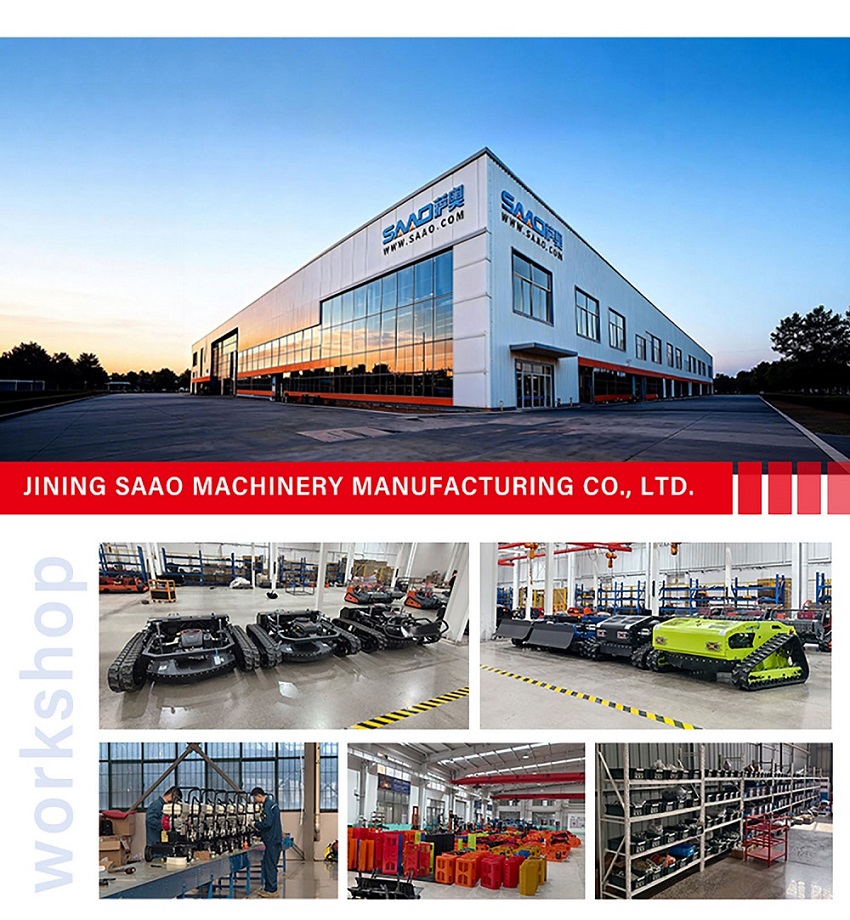
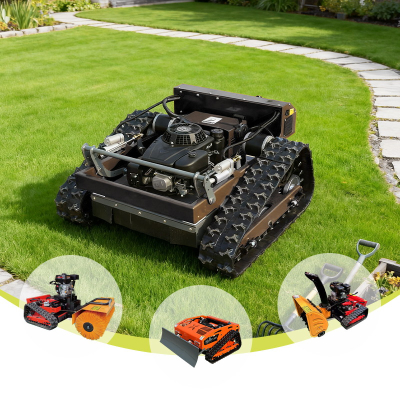
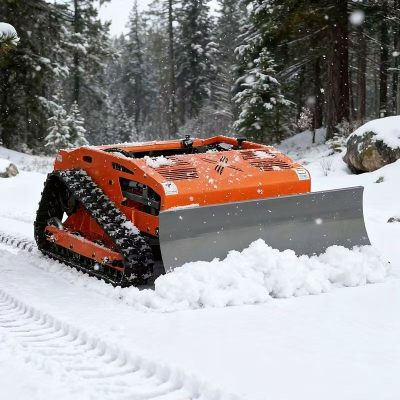
At SAAO, we build our business on the pillars outlined in this guide—technical expertise, quality excellence, compliance, collaboration, and niche experience. We specialize in standard and fully customized (OEM/ODM) lawn mowers, including rc lawn mowers, zero-turn lawn mowers, electric lawn mowers, and heavy-duty lawn mowers tailored to specific applications. Our in-house engineering team combines lawn mower design experience with cutting-edge R&D, ensuring products meet professional performance, durability, and global standards (EPA, CE, ISO 9001).
We implement rigorous QC from raw material inspection to final testing, ensuring every lawn mower meets the highest standards. Our transparent communication keeps you informed throughout production, and our flexible capacity handles all order sizes—from small batches to large-scale production. We also offer comprehensive warranties, genuine lawn mower spare parts, and responsive technical assistance to minimize downtime and maximize your investment.
We invite you to evaluate us not just on specifications, but on our partnership approach. Contact our team today to discuss your specific lawn mower needs—standard commercial models, custom OEM/ODM solutions, or niche guidance—and explore building a reliable, long-term supply chain for your lawn care equipment business.