Is Your European Market Ready for Remote-Controlled Mowers?
European landscaping and grounds-maintenance companies are increasingly required to work on slopes, roadside embankments, uneven ground and other difficult-access areas. In these conditions, the main equipment question is not simply how to cut grass. It is how to complete the work with suitable traction, appropriate operator positioning and a practical service plan.
For distributors and importers, a tracked remote-controlled mower can be a specialised addition to a professional landscaping-equipment range. It may help contractors, municipal maintenance teams and vegetation-management companies handle applications that are not always well suited to conventional walk-behind or ride-on mowers.
The opportunity is application-led: identify the customers who face difficult mowing conditions, understand their operating requirements and provide them with a product that is supported by clear documentation, training and after-sales communication.
Why consider a remote-controlled mower for the European market?
Professional mowing work can involve conditions such as:
· Steep slopes and roadside embankments
· Wet, uneven or irregular ground
· Vegetation near roads, drainage channels and industrial sites
· Restricted-access areas where conventional equipment is difficult to use
· Repetitive maintenance work that requires efficient crew planning
· Sites where operator position and working distance must be considered carefully
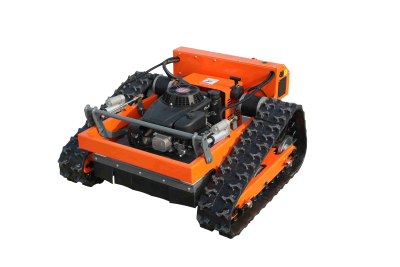
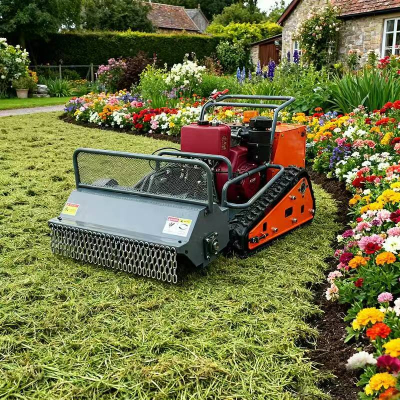
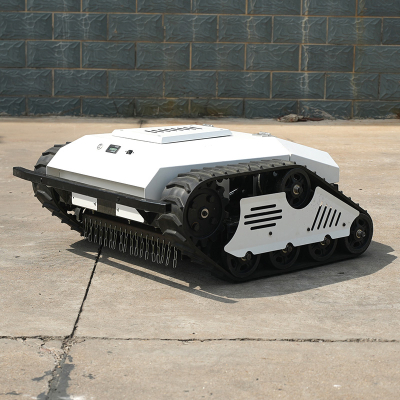
A tracked remote-controlled mower may be relevant when customers need more than a conventional lawn mower. Remote operation can allow the operator to control the machine from a position away from the immediate mowing area, while the tracked configuration may support traction on selected uneven or sloped surfaces.
Actual suitability depends on the machine specification, terrain, vegetation, weather, operating method and applicable safety requirements. A professional sales discussion should always match the product claim to the verified configuration and operating instructions.
Which customers may need this type of equipment?
A remote-controlled mower is most relevant to customers with a clear application need. Potential customer groups include:
| Customer group | Typical application | Why the product may be relevant |
|---|---|---|
| Landscaping contractors | Slopes, overgrown areas and difficult terrain | May need a specialised machine for varied job sites |
| Roadside maintenance contractors | Embankments and vegetation near roads | May need remote operation for selected difficult-access applications |
| Municipal maintenance teams | Public green spaces, drainage corridors and roadside areas | May value a practical solution for recurring grounds-maintenance work |
| Vegetation-management companies | Dense or difficult-to-access vegetation | May need equipment beyond standard lawn-maintenance machinery |
| Industrial-site maintenance providers | Uneven or restricted-access areas | May require equipment for sections that are difficult to reach with conventional machines |
| Equipment rental companies | Short-term access to specialised equipment | May consider adding remote mowing equipment to a professional rental range |
This customer list should be adapted to each country. Demand may differ according to local terrain, infrastructure, contractor structure, climate, purchasing habits and the availability of service support.
What should dealers evaluate before adding a remote-controlled mower?
A successful product launch depends on more than the mower itself. Before entering a distribution discussion, dealers should review five practical areas.
1. Customer applications
Start with the work your existing customers already perform. Ask whether they regularly maintain slopes, roadside embankments, drainage-side areas, industrial land or difficult vegetation. Existing customer enquiries are often a more useful starting point than a broad assumption about the European market.
2. Product configuration
Review the machine’s working width, cutting system, tracked undercarriage, remote-control system, operating range, transport requirements, maintenance points and recommended working conditions. The right configuration depends on the jobs the dealer intends to support.
3. Technical and compliance documentation
A supplier should be able to explain which technical documents, operating instructions, maintenance information and market-appropriate compliance materials are available for the selected model. Dealers should review these materials before making commitments to end customers.
4. Spare parts and after-sales support
Professional buyers need a clear answer to practical questions: Which parts are available? How are technical problems reported? Who provides troubleshooting support? What information is needed for maintenance and warranty communication? These details are important when introducing specialised equipment to a new market.
5. Sales and training resources
A remote-controlled mower is easier to sell when customers can see how it fits their work. Product images, application videos, catalogues, demonstration information and dealer training can help sales teams explain the equipment accurately and avoid unsupported claims.
How should a remote-controlled mower be presented to European buyers?
The clearest sales message begins with the customer’s working condition rather than a list of specifications. For example:
· How do you maintain a steep roadside embankment?
· How does your team manage wet or uneven ground?
· Which mowing tasks are difficult to complete with conventional equipment?
· Where would remote operation help you plan operator position more effectively?
· Could your business take on more specialised vegetation-management work?
These questions help the dealer understand the application before recommending a machine. They also make the product discussion more relevant to contractors, municipalities and maintenance companies.
The product’s potential value can then be connected to practical outcomes, such as:
· Supporting operator positioning away from the immediate mowing area
· Providing a tracked option for selected uneven or sloped applications
· Reducing the need for direct access to difficult working areas
· Helping contractors evaluate additional roadside or vegetation-management work
· Adding a specialised solution to an existing professional equipment range
These are application benefits, not universal guarantees. The final sales message should be based on the product’s verified capabilities and the conditions of the customer’s work site.
How SAAO makes distributor cooperation more straightforward
Becoming a distributor for specialised landscaping equipment involves several questions beyond product selection. Dealers may need to understand the applications, review technical documents, prepare sales materials, plan spare-parts support and explain the product to customers.
SAAO aims to make this process more straightforward through step-by-step communication with European distributors and importers. We help organise the main questions, provide available product information and clarify the requirements that should be considered before cooperation moves forward.
Begin with your target market
The first discussion can focus on your country or region, existing customer base and main application areas. You can share whether your customers are primarily landscaping contractors, roadside maintenance companies, municipalities, vegetation-management specialists or rental businesses.
This helps both sides assess whether a remote-controlled mower is relevant to your market and which product information should be prioritised.
Review product information and catalogues
SAAO can provide the available remote-controlled mower catalogue and technical information for your evaluation. This may include product configuration, intended applications, operating requirements, maintenance considerations and available support materials.
The exact documents depend on the model and target market. Distributors and importers should review the information against their own customer requirements and applicable local obligations. Where questions arise, SAAO can help coordinate clarification with the relevant product and technical teams.
Clarify the questions that affect sales and service
Potential distributors may have questions about:
Product selection and application suitability
Configuration and operating conditions
Spare parts and routine maintenance
Dealer and end-user training
Packaging and delivery arrangements
Warranty and after-sales communication
Product images, videos and sales materials
Market-specific documentation requirements
SAAO can help organise these questions and work toward clear, practical answers. This does not replace the distributor’s responsibility for local market decisions, customer assessment or regulatory review. It helps both sides identify important requirements earlier and communicate more efficiently.
Build a practical sales package
A specialised mower is easier to introduce when the dealer has suitable materials for professional buyers. Depending on availability and model requirements, SAAO can support discussions about:
Product catalogues and specification information
Product and application images
Demonstration videos or visual sales materials
Application explanations for dealer sales teams
Maintenance and spare-parts information
Dealer product familiarisation
Information needed to respond to customer enquiries
All marketing content should remain consistent with the actual product configuration, operating instructions and verified technical information.
A practical path to distribution cooperation
A distributor discussion with SAAO may follow these steps:
Share your market information: target country, customer profile and main applications.
Review suitable products: compare the available models with your customers’ working conditions.
Discuss technical questions: clarify configuration, operating requirements and documentation.
Plan support arrangements: review training, spare parts and after-sales communication.
Evaluate commercial fit: consider how the mower fits your current equipment range and sales network.
Define the next step: proceed only after the key product and cooperation questions are understood.
This approach does not promise that every market or dealer will be suitable. It provides a clearer way to evaluate the opportunity before investing time in promotion, stock planning or customer development.
Request the SAAO remote-controlled mower catalogue
If you are a European distributor, importer or professional landscaping-equipment dealer, a tracked remote-controlled mower may be worth evaluating for your product portfolio.
Contact SAAO to request the remote-controlled mower product catalogue and more information. Tell us your target country, customer applications and product requirements. We will help you review the available options and clarify the questions relevant to your distribution plans.
Discuss your market, product requirements and potential distribution cooperation with SAAO today.