Zero-Turn Radius (ZTR) Mowers vs Traditional Lawn Tractors: Which Is Better?
When it comes to large-scale lawn care—think suburban estates, golf courses, commercial landscapes, and orchards—two machine types dominate the conversation: zero-turn radius (ZTR) mowers and traditional lawn tractors. Each has its strengths, and the right choice depends on how you balance maneuverability, efficiency, versatility, and long-term operating costs.
In this guide, we’ll compare the two head-to-head, and explain why the Riding Yard Machine Lawn Mower, a high-performance ZTR model, offers a compelling solution that amplifies the best of zero-turn technology.
1. Maneuverability & Precision
Traditional lawn tractors operate similarly to rear-wheel-drive cars, with front wheels controlling direction and rear wheels providing propulsion, resulting in a wide turning radius that often leaves untrimmed patches and requires repeated backing up to navigate obstacles like trees, flower beds, or narrow pathways. They struggle with tight spaces and complex layouts, leading to time-consuming touch-ups.
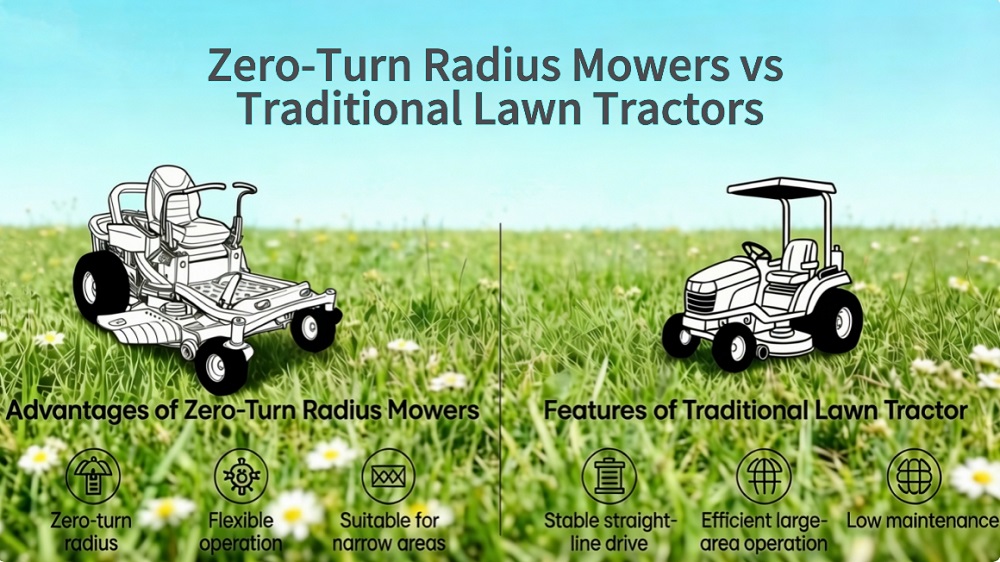
ZTR mowers, by contrast, feature dual independent rear wheel drives that can rotate in opposite directions, allowing them to pivot 360 degrees on their own footprint—eliminating turning waste and enabling seamless navigation around tight spaces and landscaping features without missing a single blade of grass. This precision makes them ideal for properties with obstacles or irregular shapes.
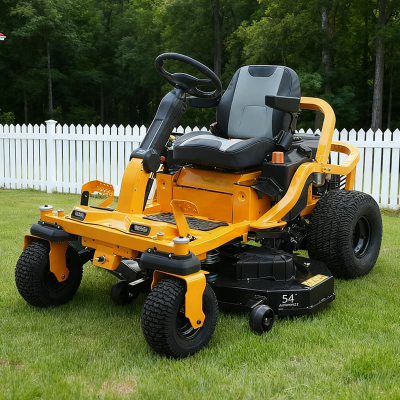
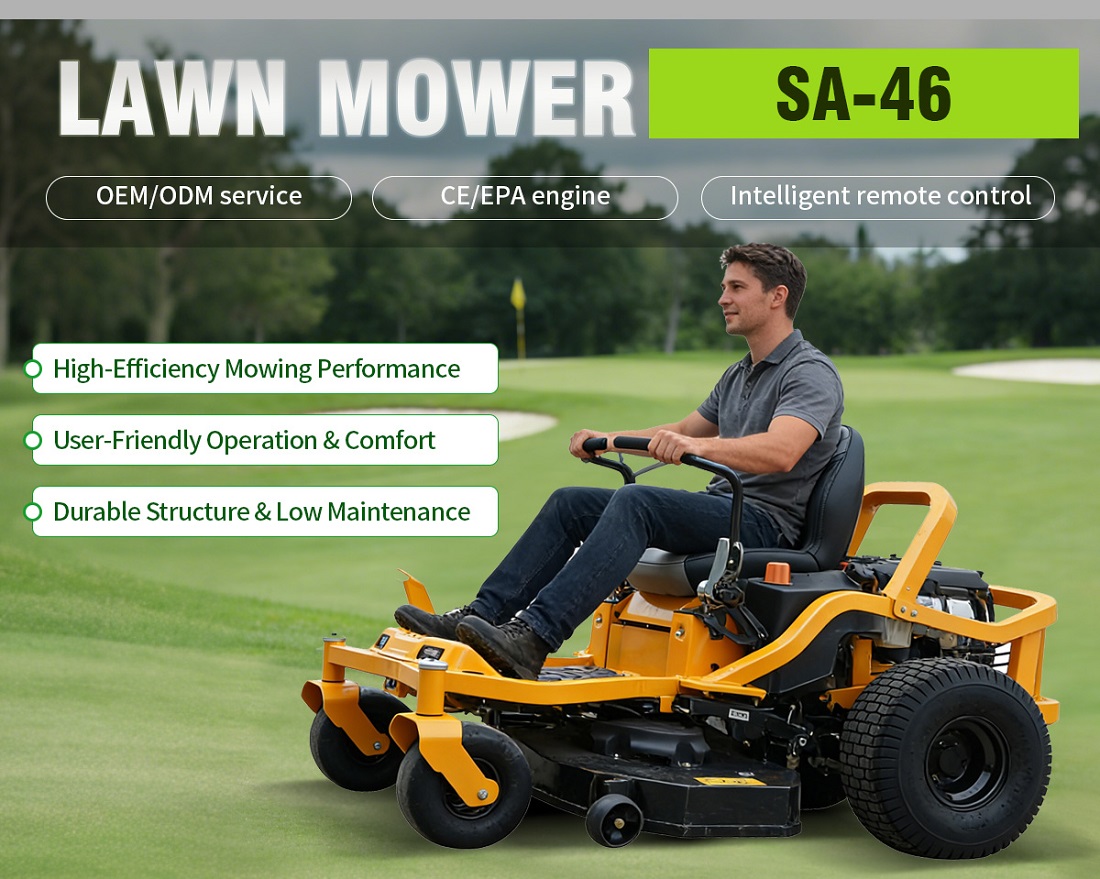
A standout example is the SAAO Riding Yard Machine Lawn Mower, a ZTR model SA46 that combines this zero-turn agility with user-friendly design, ensuring even novice operators can navigate complex lawns with ease.
In short: ZTR mowers excel in precision and maneuverability for complex layouts; traditional lawn tractors work best for open, obstacle-free spaces where wide turns are not a hindrance.
2. Efficiency & Performance
Traditional lawn tractors offer steady performance but are limited by their speed and cutting width. Most feature 42 to 46-inch cutting decks and top speeds of 5.5 mph or lower, making them suitable for small to medium lawns but inefficient for large or complex properties. They often require multiple passes to cover tight areas, increasing mowing time.
ZTR mowers deliver superior efficiency, with wider cutting decks (typically 46 to 54 inches) and higher operating speeds—many reaching 7 mph or more. Testing shows that a ZTR can finish mowing a one-acre, obstacle-heavy lawn up to 35% faster than a comparable traditional lawn tractor, translating to significant time savings for homeowners and professionals alike.
The SA46 enhances this efficiency with its 803cc 4-stroke engine (delivering robust power for rugged terrain), 46-inch dual-blade deck (ensuring a neat, professional cut per pass), and 7 mph (11.2 km/h) max speed—slashing mowing time while maintaining consistent performance.
The bottom line: ZTR mowers are the clear choice for speed and efficiency on large, complex lawns; traditional lawn tractors suffice for smaller, open spaces where efficiency is less of a priority.
3. Versatility & Adaptability
Traditional lawn tractors hold an edge in versatility, as they can accommodate a wide range of attachments—including snow blades, sweepers, fertilization tools, and dump carts—making them a multi-season investment for homeowners who need a single machine for year-round lawn and garden maintenance. They also offer superior stability on slopes (rated for 15 to 20 degrees) due to their lower, more balanced weight distribution.
ZTR mowers are primarily designed for mowing, with fewer attachment options, and most residential models are only safe for slopes up to 15 degrees (with a higher risk of side-slip). However, modern ZTRs like the SA46 bridge this gap with adjustable cutting height (1–4 inch range to suit diverse lawn conditions) and smooth side discharge for consistent performance, adapting to different grass types and landscaping needs.
In short: Traditional lawn tractors offer greater multi-season versatility and slope stability; ZTR mowers excel at specialized, efficient mowing with adaptive features for diverse lawn conditions.
4. Maintenance & Longevity
Traditional lawn tractors have simpler mechanical structures, requiring basic maintenance like oil changes, filter replacements, and occasional tune-ups. A well-maintained lawn tractor can last for years, making it a reliable choice for homeowners who prefer straightforward upkeep.
ZTR mowers, especially high-end models, feature more complex systems (such as hydraulic controls for dual-wheel drive) that require slightly more specialized maintenance. However, models like the SA46 are engineered for durability, with a robust 4-stroke engine and low-wear components that reduce long-term maintenance needs, ensuring consistent performance over time.
In short: Traditional lawn tractors are simpler to maintain; ZTR mowers require slightly more specialized care but offer durable, high-performance construction when well-maintained.
5. Cost & Value
Traditional lawn tractors are generally 30% to 50% less expensive upfront than comparable ZTR mowers. For example, John Deere’s S100 lawn tractor costs approximately 38% less than its Z330M ZTR model, a savings of $1,500. Their lower upfront cost and simpler maintenance make them budget-friendly for homeowners with smaller lawns.
ZTR mowers have a higher upfront cost, but their efficiency and time savings often justify the investment for commercial users and homeowners with large, complex lawns (2 acres or more). The Riding Yard Machine Lawn Mower SA46 offers exceptional value, combining professional-grade performance (powerful engine, efficient cutting) with competitive pricing, making it a cost-effective choice for those seeking ZTR benefits without excessive expense.
In short: Traditional lawn tractors are more affordable upfront for small lawns; ZTR mowers offer better long-term value for large, complex properties, with models like the SA46 delivering premium performance at a reasonable cost.
Comparison Category | Zero-Turn Radius (ZTR) Mowers (e.g., SAAO Riding Yard Machine Lawn Mower SA46) | Traditional Lawn Tractors |
Maneuverability & Precision | Dual independent rear wheel drives, 360° pivot on own footprint; seamless navigation around obstacles/irregular shapes without untrimmed patches. SA46 combines zero-turn agility with user-friendly design for novice operators. | Operate like rear-wheel-drive cars; wide turning radius, often leaves untrimmed patches; requires repeated backing up for obstacles; struggles with tight/complex layouts, leading to time-consuming touch-ups. |
Maintenance & Longevity | More complex systems (e.g., hydraulic controls) requiring slightly specialized maintenance. SA46: engineered for durability with robust 4-stroke engine and low-wear components, reducing long-term maintenance needs. | Simpler mechanical structure; basic maintenance (oil changes, filter replacements, tune-ups); well-maintained units last for years; straightforward upkeep. |
Cost & Value | Higher upfront cost; justified by efficiency/time savings for commercial users/homeowners with ≥2 acres complex lawns. SA46 offers exceptional value with professional-grade performance at competitive pricing. | 30%–50% lower upfront cost (e.g., John Deere S100 is 38% cheaper than Z330M ZTR); budget-friendly for smaller lawns; lower maintenance costs. |
Ideal For | Properties ≥2 acres with obstacles (trees, flower beds, narrow pathways); those prioritizing speed, precision, professional results, and minimal touch-ups. | Properties <2 acres, open/obstacle-free; those needing multi-season versatility, slope stability, lower upfront cost, and simple maintenance. |
Which One Is Right for You?
Choose ZTR (Like the Riding Yard Machine Lawn Mower) If:
·Your property is 2 acres or more with obstacles (trees, flower beds, narrow pathways)
·You want to save time with fast, precise mowing
·You need adaptive features (adjustable cutting height, smooth discharge) for diverse lawn conditions
·You prioritize professional-quality results with minimal touch-ups
Choose Traditional Lawn Tractor If:
·Your property is under 2 acres and open (few obstacles)
·You need multi-season versatility (attachments for snow, fertilization, etc.)
·You have steep slopes (15–20 degrees) and prioritize stability
·You want a lower upfront cost and simple maintenance
The ZTR Advantage: Riding Yard Machine Lawn Mower SA46
For those leaning toward a ZTR, the Riding Yard Machine Lawn Mower SA46 stands out as a purpose-built solution for large-lawn maintenance. It amplifies the best of zero-turn technology with a powerful 803cc 4-stroke engine (tackles rugged terrain without stalling), 46-inch dual-blade deck (uniform, professional cuts), adjustable cutting height, and 7 mph max speed—all designed to eliminate the pain points of underpowered, time-consuming mowing.
Engineered for both residential and commercial use, it adapts seamlessly to diverse environments—from suburban estates to golf courses and orchards—delivering effortless, efficient lawn care with minimal strain on the operator.
Final Thoughts
There’s no single “best” lawn mower—only the one that fits your land, your workload, and your operational priorities.
·ZTR mowers are ideal for those who value speed, precision, and efficiency on large, complex lawns.
·Traditional lawn tractors remain the practical choice for smaller, open spaces where versatility, slope stability, and budget are top priorities.
If you’re still unsure, the key is to match your machine to your lawn’s size and layout. For most homeowners and professionals with complex, large properties, a high-performance ZTR offers the perfect balance of speed, precision, and value—turning lawn care from a chore into a streamlined task.