Manual Lawn Mower vs. Remote Control Lawn Mower: Which Is Better for Residential Yards?
1. Introduction
Choosing the right lawn mower can make a significant difference in maintaining a clean and healthy residential yard. Whether you have a small backyard, a spacious garden, or a property with uneven terrain, selecting the right equipment depends on your lawn size, terrain conditions, and mowing preferences.
When comparing different residential mowers, two common options are manual walk-behind lawn mowers and remote control lawn mowers.
A manual lawn mower is a traditional choice for homeowners who prefer direct control and straightforward operation. It is generally suitable for small, relatively flat lawns. A remote control lawn mower, on the other hand, allows operators to control the machine from a distance, making it a practical alternative for larger yards, uneven ground, and areas where pushing a mower manually can become tiring.
So, which option is better for your property?
Let's compare their features, advantages, limitations, and ideal applications to help you make an informed decision.
2. What Is a Manual Lawn Mower?
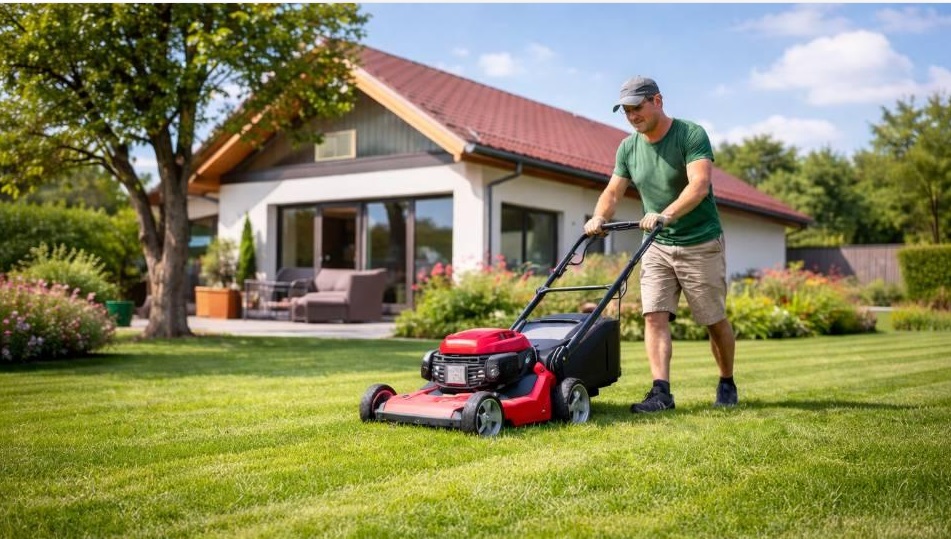
A manual lawn mower, commonly referring to a walk-behind push mower in residential lawn care, is a machine that requires the operator to walk behind it and guide its movement while cutting grass.
Depending on the design, manual lawn mowers can be powered by gasoline, electricity, batteries, or even human effort in the case of traditional reel mowers.
Many homeowners choose light lawn mowers because they are relatively easy to maneuver, store, and operate in smaller outdoor spaces.
Advantages of Manual Lawn Mowers
· Simple Operation: Walk-behind designs are generally easy to understand and operate, making them suitable for routine residential lawn maintenance.
· Lightweight Options: Many light lawn mowers are designed for easy pushing, turning, and storage.
· Lower Initial Investment: Basic residential lawn mowers are often more affordable than specialized remote-controlled equipment.
· Good for Small Lawns: They work well in compact gardens, flat backyards, and regularly maintained grass areas.
Limitations of Manual Lawn Mowers
Despite their convenience, manual lawn mowers have some limitations:
· Require continuous physical effort from the operator.
· Can become tiring when mowing large residential properties.
· May be difficult to maneuver on steep slopes or uneven ground.
· Some lightweight models have limited cutting capacity when dealing with dense or overgrown grass.
For homeowners with small, flat lawns, a traditional walk-behind mower is often a practical choice. However, larger properties and more challenging terrain may require a different mowing solution.
3. What Is a Remote Control Lawn Mower?
A remote control lawn mower is designed to operate through a wireless remote controller rather than requiring the operator to walk behind the machine.
Most tracked remote control lawn mowers use rubber tracks to move across different ground conditions. Depending on the model, they may also feature adjustable cutting heights, electric starting systems, and hybrid gasoline-electric power systems.
Unlike conventional residential mowers, remote-controlled models allow operators to maintain a safe and comfortable distance while controlling the mowing process.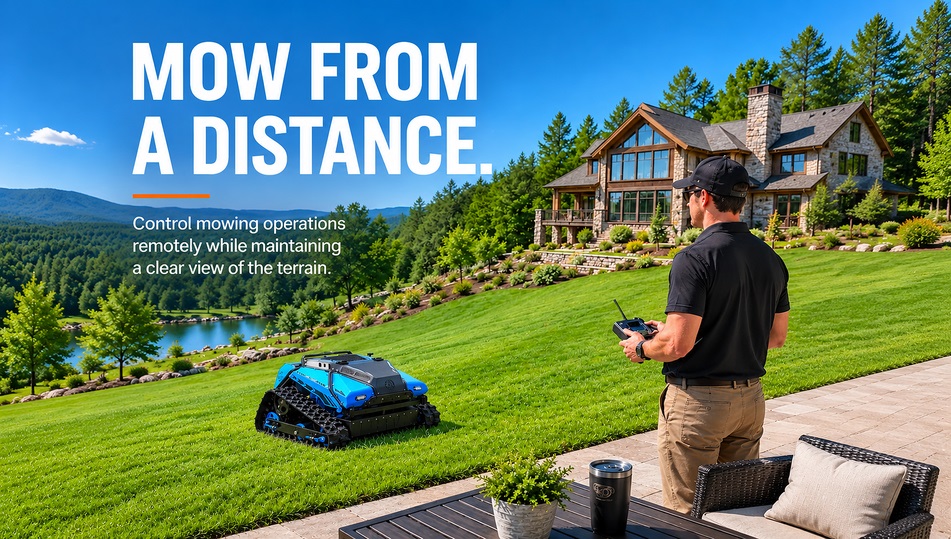
Advantages of Remote Control Lawn Mowers
· Reduced Physical Effort: Operators do not need to push or walk behind the machine throughout the mowing process.
· Remote Operation: Wireless control allows the operator to manage mowing movements from a distance.
· Tracked Mobility: Rubber tracks provide traction on uneven ground and help the machine navigate challenging terrain.
· Versatile Grass Maintenance: Certain models can handle taller grass and more demanding mowing conditions than typical lightweight residential mowers.
Limitations of Remote Control Lawn Mowers
Remote control lawn mowers are not necessarily the best choice for every homeowner.
· Generally require a higher initial investment.
· Heavier and larger than most lightweight walk-behind lawn mowers.
· Require more storage space and routine maintenance.
· May be excessive for small, flat residential lawns.
For homeowners with larger gardens, sloped yards, or difficult-to-maintain grassy areas, a remote control lawn mower can offer greater operating convenience.
4. Manual Lawn Mower vs. Remote Control Lawn Mower: Key Differences
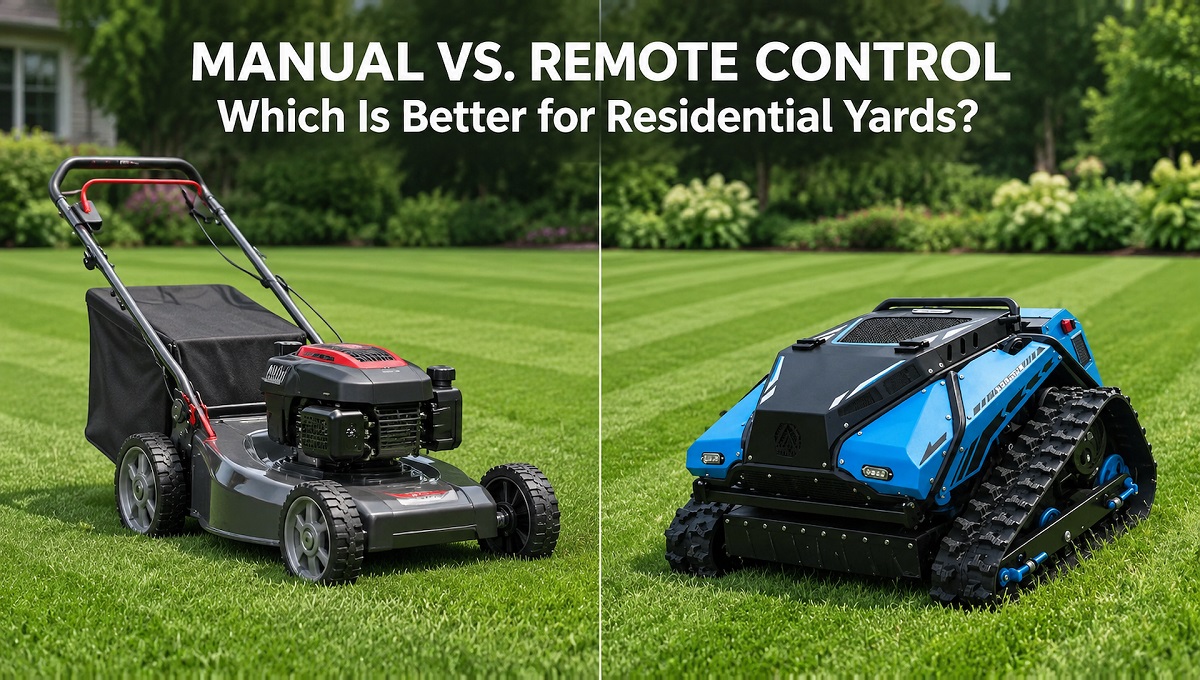
Both types of residential lawn mowers can maintain grass effectively, but they are designed around different operating requirements.
Here is a comparison of their main characteristics.
Comparison | Manual Walk-Behind Mower | Remote Control Lawn Mower |
|---|---|---|
Operation | Manually pushed and guided | Wireless remote operation |
Physical Effort | Requires continuous walking and pushing | Reduces physical operating effort |
Mobility | Suitable for relatively flat lawns | Tracked models suit uneven terrain |
Lawn Size | Small to medium lawns | Medium to large grassy areas, depending on model |
Terrain | Best for flat or gently sloping ground | Better suited to challenging ground conditions |
Cutting Height | Depends on mower design | Often electrically adjustable |
Storage | Usually compact | Requires more storage space |
Initial Cost | Generally lower | Generally higher |
Maintenance | Relatively straightforward | More components and systems to maintain |
The main difference is not simply how the grass is cut, but how the machine is operated and what types of terrain it can handle.
If your priority is affordability and simplicity, a manual lawn mower may be sufficient. If reducing physical effort and handling more challenging terrain are important, a remote control model is worth considering.
5. Which Residential Lawn Mower Is Best for Your Yard?
The best residential lawn mower depends on your property rather than the machine's features alone.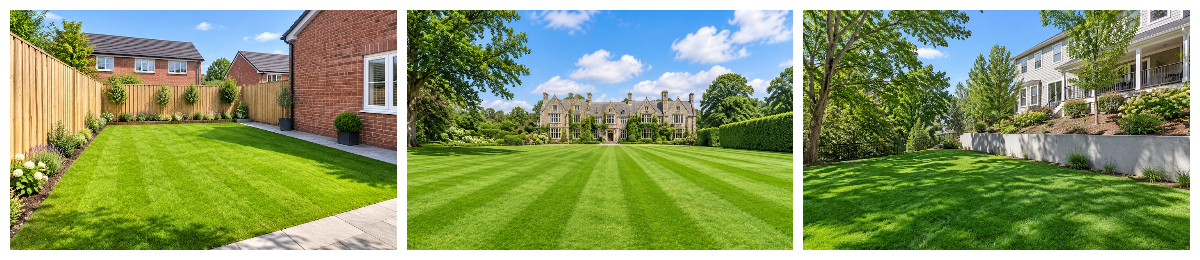
Small, Flat Residential Lawns
For small lawns with relatively smooth and level ground, a lightweight walk-behind mower is usually the more practical option.
It is easy to maneuver around flower beds, trees, garden paths, and other obstacles. Homeowners who mow regularly may find that a basic manual lawn mower meets their everyday requirements.
Medium to Large Gardens
Larger residential properties require more mowing time and physical effort.
If you have extensive grassy areas, a remote control lawn mower can help reduce the need to walk behind the machine continuously. Its remote operation also provides greater flexibility when maintaining open lawns and areas with changing ground conditions.
Uneven Ground and Sloped Yards
Sloped or uneven lawns can make conventional mowing more difficult.
Pushing a walk-behind mower uphill or controlling it on uneven surfaces may require considerable physical effort. A tracked remote control lawn mower offers an alternative through its crawler-style mobility and remote operation.
For properties with challenging terrain, choosing a mower designed for these conditions can make routine grass maintenance more manageable.
6. SAAO Remote Control Lawn Mowers for Demanding Residential Lawn Care
For homeowners or property maintenance operators who need more than a conventional walk-behind mower, SAAO offers tracked remote control lawn mower solutions.
Two models worth considering are the SAAO SAG600 and SH-550B.
Both feature gasoline-electric hybrid power systems, built-in generators, rubber tracks, and remote control operation. Their configurations make them suitable for mowing tasks where conventional light lawn mowers may not provide the required mobility or operating convenience.
SAAO SAG600 Tracked Remote Control Lawn Mower
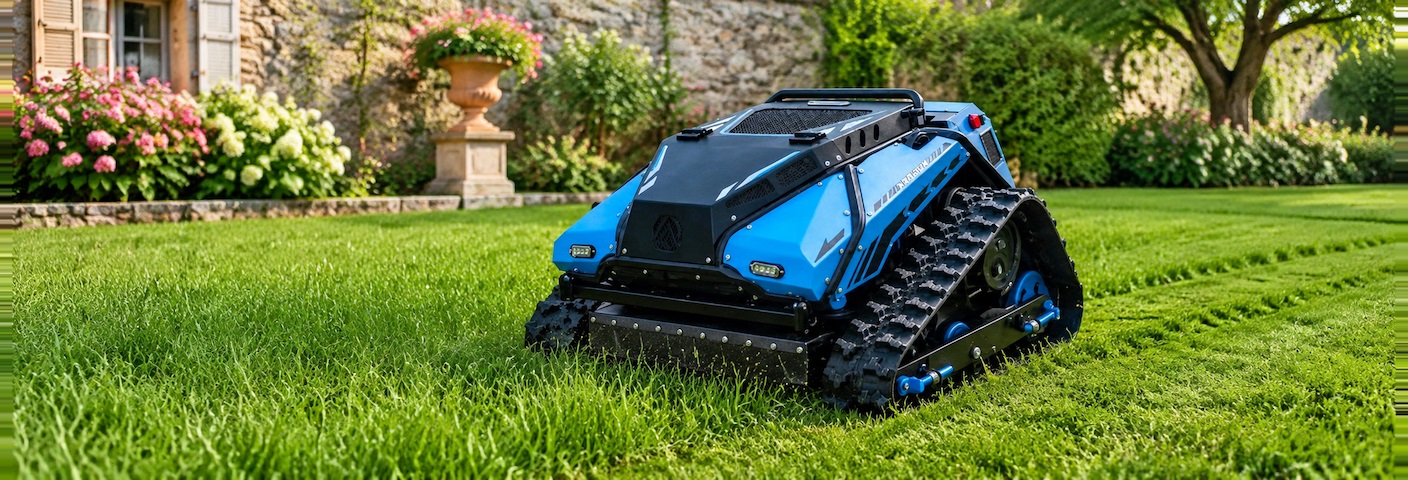
The SAAO SAG600 is a tracked remote control lawn mower designed for versatile grass maintenance.
Powered by a 9.5 HP Loncin 224 four-stroke gasoline engine, it combines gasoline power with a built-in 2200W generator to support its hybrid operating system.
Its 600 mm cutting width provides a practical balance between mowing coverage and maneuverability. The electric grass-height adjustment system allows operators to select cutting heights from 1 cm to 12 cm.
With 32 engineering rubber tracks and a remote control range of up to 500 meters, the SAG600 provides an alternative to traditional manual lawn mowers for properties with more demanding mowing conditions.
Key Features:
· 600 mm Cutting Width: Covers a relatively wide cutting area for routine grass maintenance.
· 9.5 HP Loncin Engine: Powered by a Loncin 224 four-stroke gasoline engine.
· 2200W Built-in Generator: Supports the machine's hybrid gasoline-electric configuration.
· Electric Height Adjustment: Adjustable cutting height from 1 cm to 12 cm.
· Tracked Mobility: Equipped with 32 engineering rubber tracks.
· 500 m Remote Control Range: Supports wireless operation with high- and low-speed settings.
· Electric Start: Provides convenient machine starting.
SAG600 Specifications
Parameter | Specification |
|---|---|
Model | SAG600 Tracked |
Cutting Width | 600 mm |
Cutting Height | 1–12 cm |
Power Source | Gasoline-Electric Hybrid |
Engine | Loncin 224, 4-Stroke |
Engine Power | 9.5 HP |
Generator | Built-in 2200W |
Track Type | 32 Engineering Rubber Tracks |
Remote Control Range | Up to 500 m |
Travel Speed | 0–4 km/h |
Fuel Tank Capacity | 1.4 L |
Starting Method | Electric Start |
Machine Weight | 161 kg |
SAAO SH-550B Remote Control Tracked Lawn Mower
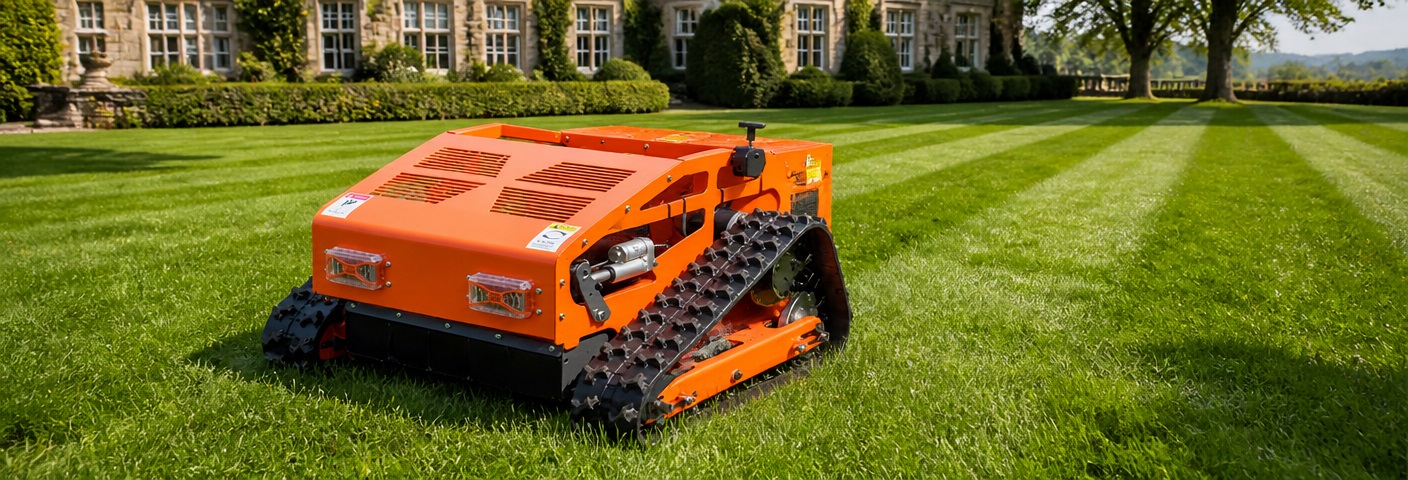
The SAAO SH-550B is another option for users looking for a compact tracked remote control mower.
It features a 550 mm mowing width and an electric cutting-height adjustment system ranging from 1 cm to 20 cm. This wider adjustment range provides flexibility for different grass maintenance requirements.
The machine is equipped with a 7.5 HP Loncin 196 four-stroke gasoline engine and a built-in 2200W generator.
Its dual 800W integrated gearbox configuration provides drive power, while the 32 engineering rubber tracks support movement across uneven ground.
With a remote control distance of up to 500 meters and high- and low-speed settings, the SH-550B allows operators to control mowing operations without continuously walking behind the machine.
Key Features:
· 550 mm Mowing Width: Suitable for a range of grass maintenance tasks.
· 7.5 HP Loncin Engine: Uses a Loncin 196 four-stroke gasoline engine.
· 2200W Built-in Generator: Supports its hybrid power configuration.
· Electric Height Adjustment: Cutting height adjustable from 1 cm to 20 cm.
· Dual Drive System: Equipped with 800W × 2 integrated gearboxes.
· Rubber Track Design: Uses 32 engineering rubber tracks.
· 500 m Remote Control Range: Supports high- and low-speed operation.
SH-550B Specifications
Parameter | Specification |
|---|---|
Model | SH-550B |
Cutting Width | 550 mm |
Cutting Height | 1–20 cm |
Power Source | Hybrid |
Engine | Loncin 196, 4-Stroke |
Engine Power | 7.5 HP |
Generator | Built-in 2200W |
Drive Power | 800W × 2 Integrated Gearbox |
Track Type | 32 Engineering Rubber Tracks |
Remote Control Range | Up to 500 m |
Travel Speed | 0–4 km/h |
Dimensions | 940 × 940 × 550 mm |
SAG600 vs. SH-550B: Which Model Should You Choose?
Feature | SAG600 | SH-550B |
|---|---|---|
Cutting Width | 600 mm | 550 mm |
Engine | Loncin 224 | Loncin 196 |
Engine Power | 9.5 HP | 7.5 HP |
Cutting Height | 1–12 cm | 1–20 cm |
Generator | 2200W | 2200W |
Drive System | Tracked | Dual 800W Gearboxes |
Remote Control Range | 500 m | 500 m |
Travel Speed | 0–4 km/h | 0–4 km/h |
The SAG600 offers a wider cutting width and higher engine power, making it worth considering when mowing coverage and engine output are priorities.
The SH-550B offers a wider cutting-height adjustment range, which may be useful when grass height requirements vary.
Both models provide remote operation and tracked mobility, giving users more flexibility when maintaining larger or uneven grassy areas.
7. How to Choose Between a Manual Lawn Mower and a Remote Control Model
Before purchasing a residential lawn mower, consider the following factors:
(1) Lawn Size
For small residential lawns, a lightweight walk-behind mower is often sufficient. Larger properties may benefit from the reduced physical effort offered by remote-controlled equipment.
(2) Terrain Conditions
Flat lawns are generally easier to maintain with traditional residential mowers. Uneven ground and slopes may require a machine with a suitable tracked drive system.
(3)Operating Convenience
If you prefer direct physical control and simple operation, a manual lawn mower is a straightforward choice. If you want to operate the mower from a distance, a remote control model may be more suitable.
(4)Grass Height and Cutting Requirements
Different mower designs have different cutting-height adjustment ranges and mowing capabilities. Consider the type of grass and how frequently you maintain your lawn before choosing a model.
(5)Budget and Maintenance
A traditional light lawn mower generally has a lower purchase cost and simpler maintenance requirements. Remote control lawn mowers involve more advanced systems and may require a higher initial investment.
The right choice is the one that matches your lawn conditions, maintenance expectations, and available budget.
8. Final Thoughts
Manual lawn mowers and remote control lawn mowers serve different residential lawn care needs.
A traditional walk-behind mower remains a practical solution for small, flat gardens where affordability, compact storage, and straightforward operation are the main priorities.
However, for larger residential properties, uneven lawns, and areas that require more demanding grass maintenance, a tracked remote control lawn mower can provide an alternative with reduced physical effort and greater operating flexibility.
SAAO SAG600 and SH-550B offer two different configurations for users considering remote-controlled mowing equipment.
By comparing cutting width, engine power, cutting-height adjustment, and terrain requirements, you can choose a lawn mower that better matches your property.
Looking for a remote control lawn mower for your garden or property maintenance business? Contact SAAO to learn more about the SAG600 and SH-550B and discuss the right configuration for your mowing requirements.
9. Frequently Asked Questions About Residential Lawn Mowers
What is the best lawn mower for residential use?
The best residential lawn mower depends on your lawn size, terrain, and maintenance requirements. A lightweight manual lawn mower is suitable for small, flat yards, while a remote control lawn mower may be a better option for larger properties, uneven ground, or sloped areas.
Is a manual lawn mower suitable for large yards?
A manual lawn mower can maintain large lawns, but it requires more walking and physical effort. For properties with extensive grass areas, a self-propelled or remote control lawn mower can help reduce the operator's workload.
What is the difference between a manual lawn mower and a remote control lawn mower?
A manual lawn mower requires the operator to walk behind and guide the machine during mowing. A remote control lawn mower uses a wireless controller, allowing the operator to manage the machine from a distance. Remote-controlled models can also feature tracked drive systems for improved mobility on uneven terrain.
Are lightweight lawn mowers better for small residential yards?
In many cases, yes. Light lawn mowers are generally easier to push, turn, transport, and store. They are particularly practical for small residential gardens with relatively flat surfaces and limited storage space.
What type of lawn mower is best for uneven ground?
For uneven ground, a tracked lawn mower may provide better traction and mobility than a conventional walk-behind mower. Remote control tracked lawn mowers are worth considering for properties with slopes, rough grass areas, and challenging ground conditions.
Is a remote control lawn mower suitable for residential use?
Yes. Remote control lawn mowers can be used for residential properties, particularly those with large gardens, uneven terrain, or areas that are difficult to mow manually. However, their size, weight, and purchase cost may make them less suitable for small, flat lawns.
How do I choose between gasoline and electric residential lawn mowers?
Gasoline lawn mowers generally offer longer operating flexibility without depending on external charging, while battery-powered electric mowers are often quieter and produce no direct exhaust emissions during operation. Hybrid gasoline-electric models combine a gasoline engine with an electrical power system and may suit users who need a different balance of power and operating convenience.
What cutting width is suitable for a residential lawn mower?
The suitable cutting width depends on lawn size and the number of obstacles. Smaller cutting widths are easier to maneuver around trees, flower beds, and narrow spaces. Wider cutting widths can cover more grass in each pass and may be more efficient for larger open areas.
How often should I mow my residential lawn?
Mowing frequency depends on grass species, growing conditions, rainfall, and seasonal temperatures. During active growing periods, many residential lawns need mowing approximately once a week. Slower-growing grass may require less frequent maintenance.
Can a remote control lawn mower replace a traditional manual lawn mower?
A remote control lawn mower can replace a traditional mower for certain maintenance tasks, especially on larger or more challenging properties. However, it may not be as convenient as a lightweight manual mower for small gardens, narrow passages, or areas requiring frequent close trimming.