How to Read Lawn Mower Horsepower? Recommended HP for Lawn Maintenance & Land Clearing
When purchasing a lawn mower, Horsepower (HP) is usually the first specification buyers notice. However, many users misunderstand that higher horsepower always means better performance. The key is matching horsepower to your lawn area, terrain and actual working conditions.
Insufficient horsepower leads to frequent stalling in thick grass and low working efficiency. Excess horsepower means unnecessary extra costs and wasted energy. How should you interpret lawn mower horsepower? What horsepower is required for regular lawn trimming and land clearing? This article delivers full details.
1. Quick Reference Chart: Recommended HP for Land Clearing & Lawn Mowing
If you want a direct answer, use this table to confirm your required power within 30 seconds:
| Application Scenario | Lawn Area / Work Type | Recommended Horsepower | Reference Machine Type |
|---|---|---|---|
| Regular Lawn Mowing | ≤ 500 ㎡ (Small Yard) | 3–5 HP | Walk-behind Lawn Mower |
| Regular Lawn Mowing | 500–2000 ㎡ (Medium Yard) | 5–6.5 HP | Walk-behind or Compact Ride-on Mower |
| Regular Lawn Mowing | 2000–5000 ㎡ (1–3 Acres) | 14–16 HP | Ride-on Lawn Mower |
| Regular Lawn Mowing | ≥ 5000 ㎡ (Over 3 Acres) | 18–24 HP and above | Zero-turn or Large Ride-on Mower |
| Light Land Clearing | Tall Grass & Weeds Dominated | 10–15 HP | Walk-behind Brush Cutter |
| Heavy Land Clearing | Shrubs & Thick Vegetation | 15–20 HP and above | Heavy-Duty Brush Mower |
Note: The table serves as reference only. Final selection should consider terrain slope and vegetation density comprehensively.
2. Two Core Concepts: What Is Horsepower?
2.1 What is Horsepower (HP)?
Horsepower is a unit measuring engine power, indicating how much work an engine can deliver per unit time. For lawn mowers, horsepower determines working speed: higher HP enables faster blade rotation and higher cutting efficiency.
Most household lawn mowers feature 2–7 HP engines, while ride-on mowers generally range from 13 HP to over 30 HP.
2.2 Horsepower ≠ Torque — Do Not Mislead by Figures
Many buyers believe “higher horsepower equals stronger pulling force”, which is a common misconception.
Torque determines actual tractive force. It measures the rotational force driving cutting blades, and decides whether the mower maintains stable operation against thick grass, slopes and extra resistance.
Simply put:
Torque = Whether the blades can keep rotating (avoid stalling amid thick grass and slopes)
Horsepower = How fast the blades rotate (determines overall working efficiency)
An engine with high torque often outperforms another unit with higher horsepower but low torque when tackling thick grass and uneven terrain. Therefore, check both parameters instead of focusing merely on horsepower ratings.

3. Choose Horsepower for Lawn Mowing Based on Area & Terrain
Select by Lawn Area
Small Yard (≤ 500 ㎡): 3–5 HP walk-behind mower meets all demands. The practical difference between 5.5 HP and 7 HP models is minimal for regular trimming.
Medium Lawn (500–2000 ㎡): 5–6.5 HP walk-behind mower or 8.5–12.5 HP ride-on mower is suitable. Self-propelled models are recommended for lawns over 1000 ㎡ to boost efficiency.
Large Lawn (2000–5000 ㎡ / 1–3 Acres): Pick ride-on mowers of 14–16 HP minimum, equipped with at least 38-inch cutting width to greatly improve productivity.
Extra-Large Lawn (Over 5000 ㎡ / 3 Acres): Choose zero-turn or large ride-on mowers with 18–24 HP.
Select by Terrain
Flat ground: Standard horsepower works well
Rolling or gently sloped terrain: 18–24 HP to handle extra resistance
Steep slopes: Higher horsepower paired with stronger torque to prevent power drop during climbing
4. Required Horsepower for Land Clearing
Land clearing differs greatly from routine lawn maintenance. It usually deals with tall grass, shrubs, thick weeds and even saplings, demanding far higher power than regular lawn trimming.
HP Recommendations for Land Clearing
Light Land Clearing (mainly tall weeds & overgrown grass): 10–15 HP. Suitable for tall wild grass and medium-density vegetation.
Heavy Land Clearing (shrubs & thick vegetation): 15–20 HP and above. Robust power and reinforced cutter deck are required to process bushes and thick plants.
Why Land Clearing Needs Higher Horsepower
Four key reasons raise power requirements for clearing work:
| Factor | Explanation |
|---|---|
| Vegetation Density | Thick, overgrown weeds and bushes create far greater resistance than maintained lawns |
| Vegetation Height | Tall grass exponentially increases resistance on blades, requiring higher torque to sustain rotation speed |
| Hidden Obstacles | Stones, stumps and debris on uncultivated land demand sufficient power for blades to pass through |
| Continuous High Load | Clearing operations often run under heavy load for hours, placing strict requirements on engine durability |
Reference guideline: Light clearing requires roughly 2 HP per foot of cutting width; heavy-duty clearing (cutting saplings up to 2 inches diameter) needs 5 HP per foot of cutting width.
5. Horsepower Is Not Everything: Torque & Cutting Width Matter
Even with proper horsepower selection, two more factors influence field performance: torque and cutting width.
Torque: Determines Real Pulling Power
As mentioned above, torque guarantees sustained output under resistance. For thick grass, slopes and complex terrain, high torque brings more tangible advantages than high horsepower. Diesel engines generally deliver greater torque and better durability, ideal for demanding land clearing and slope work.
Cutting Width: Decides How Wide You Cut Each Pass
Mowing efficiency = Horsepower × Cutting Width. A mower with adequate horsepower but narrow cutting width wastes plenty of working time. For large lawns, choose models with cutting width above 38 inches.
Guideline for selection: Match horsepower to lawn area, torque to terrain, and machine type to application purpose. This combination helps you find the most suitable lawn mower.
6. Horsepower Range Reference for Different Lawn Mower Types
| Mower Type | Typical Horsepower Range | Suitable Application |
|---|---|---|
| Walk-behind Lawn Mower | 2–7 HP | Regular trimming for small residential yards |
| Walk-behind Mower (Thick Grass / Clearing) | 10–15 HP | Tall grass, thick weeds & light land clearing |
| Ride-on Lawn Mower | 13–30 HP | Medium to large lawns |
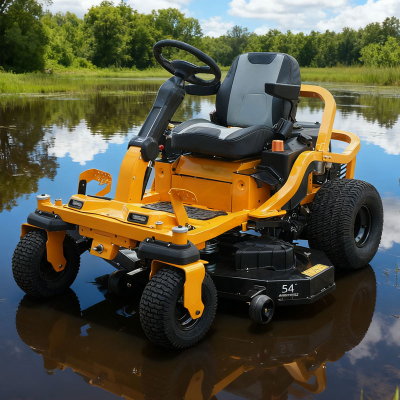
| Zero-turn Mower | 20–38 HP | Large lawns & commercial landscaping |
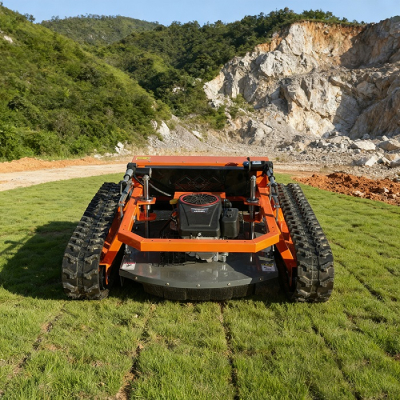
| Tracked Remote-Controlled Mower | Model-Dependent | Slopes, orchards and complex terrain |
7. Summary
Match horsepower to lawn area, torque to terrain conditions, and machine type to working purpose. Only in this way can you get a lawn mower with adequate power without unnecessary power surplus.
Recommended Reading: Horsepower Configuration of SAAO Lawn Mowers
SAAO lawn mower product lineup covers scenarios from residential courtyard maintenance to commercial land clearing. Different models with targeted horsepower satisfy diverse demands:
SAG-600 Series (9 HP): Ideal for regular trimming of medium lawns and light slope operations
SH-800DL Series (16 HP): Perfect for large lawns, orchard weeding and medium-level land clearing
SH-1100IEC Series (25 HP): Suitable for ultra-large lawns, heavy land clearing and complicated terrain operations
For more details on model horsepower specifications and applicable scenarios, visit the official SAAO website or contact our sales team for professional selection advice.