Power Source: Gas, Electric or Hybrid?
Gas Mowers – Still Relevant for Large, Tough Terrain
Gas-powered mowers remain the best choice for very large properties (over three acres), thick wet grass, and users who already have gas equipment. Their primary advantages are unlimited runtime and lower upfront costs for basic models.
However, gas mowers come with significant drawbacks: high maintenance (oil changes, filters, spark plugs, carburetor), loud operation (85–95 dB, requiring hearing protection), and notable emissions. According to environmental data, one hour of gas mowing produces as much smogforming pollution as driving a car for 45 miles.
In 2026, gas mowers are slowly being phased out of residential shelves in Europe and parts of North America. Buyers should be aware that parts availability may tighten over the next three to five years.
Electric (Battery) Mowers – Ideal for Residential Lawns
Cordless electric mowers have become the go-to choice for homeowners with lawns under one acre. They offer push-button starting (always reliable), near-silent operation (60–75 dB, allowing early-morning mowing without disturbing neighbors), zero direct emissions, and very low maintenance (only blade sharpening and deck cleaning).
The main limitations are runtime (30–60 minutes per charge, though swappable batteries are now common) and higher upfront cost compared to entrylevel gas models. Battery replacement is needed every five to seven years, costing $100–$200.
With lithium-ion prices dropping 40% since 2022, a good 40V–80V battery mower now delivers realworld runtime equal to a tank of gas for lawns up to threequarters of an acre. Many 2026 models include swappable batteries, eliminating the “run out of juice” problem.
Hybrid Mowers – The Best of Both Worlds
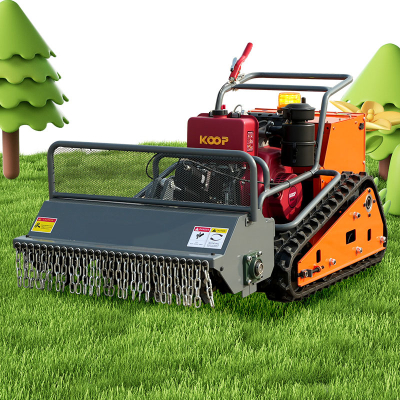
Hybrid systems combine a gasoline or diesel engine with a generator and electric drive motors. They deliver unlimited runtime (stop for fuel, not for charging), instant torque for hills and thick grass, fewer wear parts (no belts), and often include remote control.
Hybrids are ideal for large properties, commercial landscapers, orchards, and any application where unlimited runtime and electric-drive benefits are needed. They now hold approximately 25% of the commercial market.
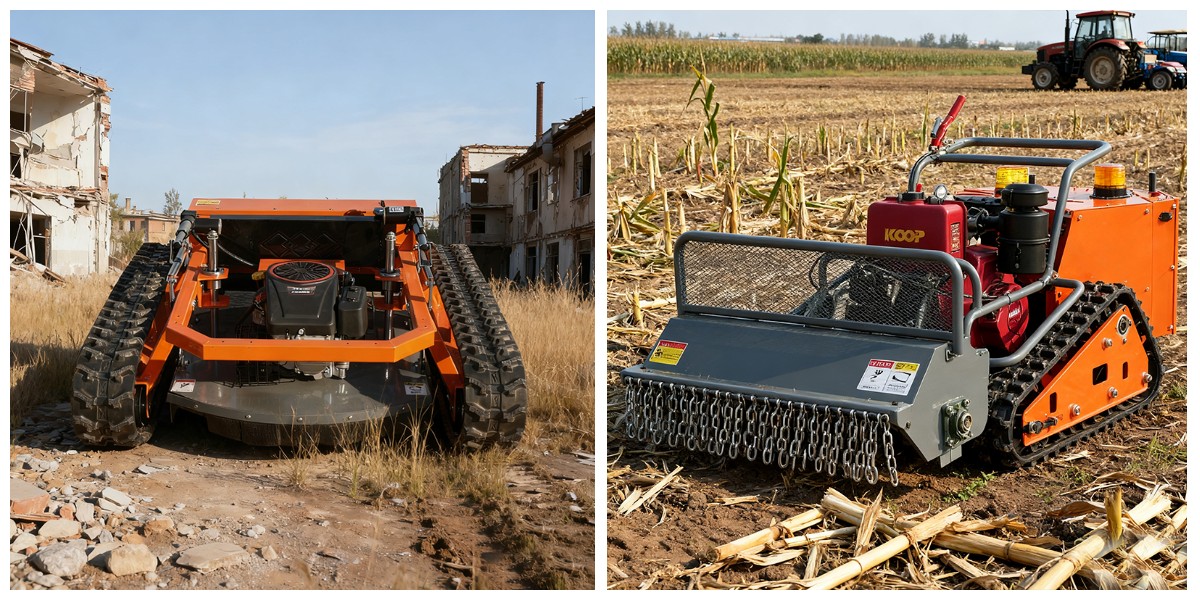
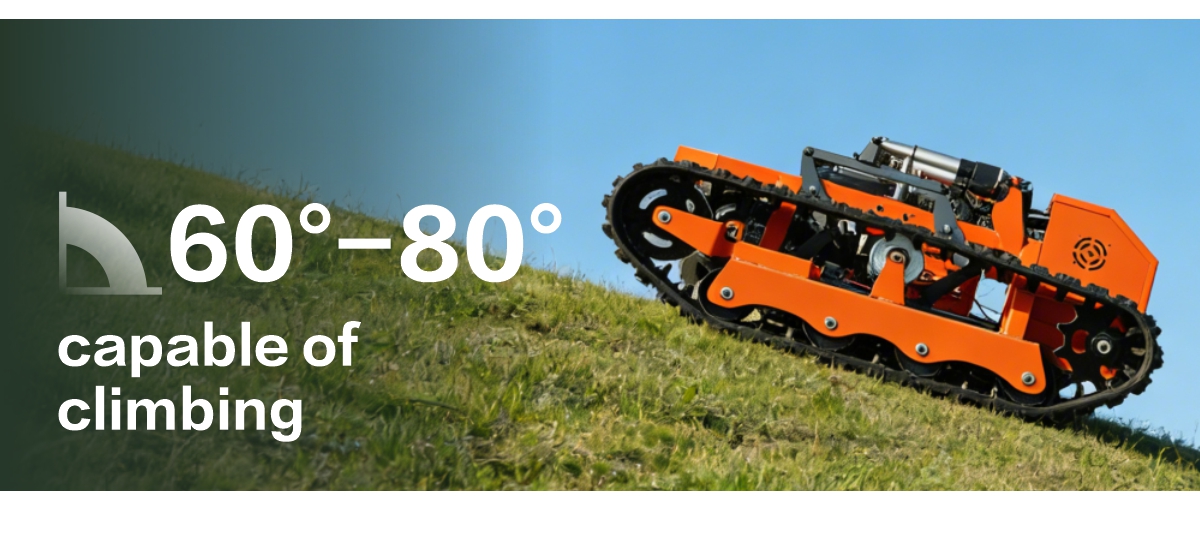
SAAO’s SH-800DL (16HP diesel hybrid) and SH-1100IEC (25HP diesel hybrid) are prime examples, offering 60° slope climbing, 500-meter remote control, and electric drive efficiency with diesel endurance.
Summary by property size:
Under ½ acre → battery electric
½ to 2 acres → battery with swappable packs or hybrid
Over 2 acres or commercial → hybrid or highend gas
Steep slopes or orchards → remotecontrolled hybrid (SAAO SH series)
Cutting Deck: Width, Blades and Height Adjustment
Deck Width and Productivity
Cutting width directly affects how long it takes to finish a lawn. Typical ranges:
16–20 inches – small urban lawns, tight spaces
21–30 inches – most residential lots (¼–½ acre)
30–42 inches – large residential, light commercial
42–54 inches – commercial, farms, estates
54–72 inches – golf courses, sports fields, large orchards
As a rule of thumb, every extra 10 inches of deck width saves approximately 15–20 minutes per acre. However, wider decks are harder to maneuver around obstacles, so a balance is needed.
Blades and Height Adjustment
Most 46-inch and larger commercial mowers use twin blades for better lift, finer clippings, and a cleaner cut. Mulching blades cut grass multiple times to produce fine mulch that feeds the lawn.
Cutting height adjustment can be manual (lever or pin, requiring the operator to stop) or electric (push-button or remote control). Electric adjustment is essential for slope mowers, as operators should not have to walk back to the machine on a 50° incline. SAAO’s SH series offers 1–20 cm remote electric adjustment.
For 2026, look for at least 2.5–10 cm (1–4 inches) of adjustment range. More range is better for properties with different grass types or seasonal growth patterns.
Terrain Considerations: Flat, Sloped and Orchard
Flat, Open Lawns
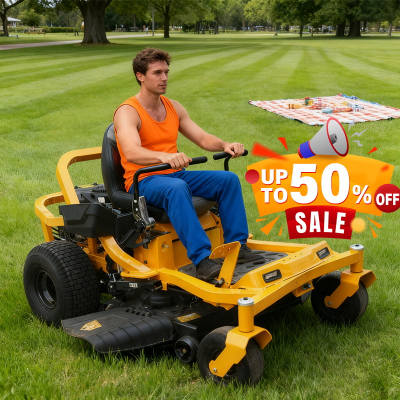
Any mower works. Prioritize speed and deck width. Zero-turn mowers (such as SAAO’s SA46 and SA54) can cut mowing time in half compared to traditional tractors.
Hills and Slopes (15°–30°)
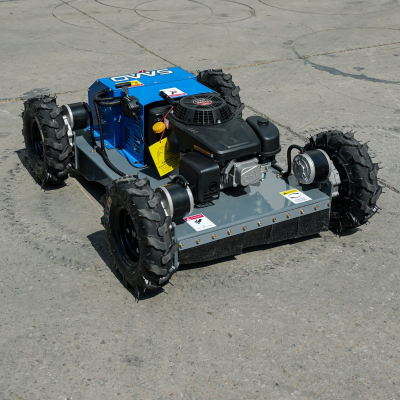
Standard push mowers and zero-turns are not recommended due to loss of traction and tip-over risk. Instead, look for rearwheel drive or all-wheel drive walk-behinds, or a remote-controlled tracked mower. Rubber tracks provide superior grip compared to wheels. SAAO’s SH-550B climbs 50° slopes, and the SH800DL handles 60° inclines.
Steep Slopes (30°–60°)
Never operate a ride-on mower on steep slopes—the rollover hazard is severe. Remote-controlled tracked mowers are the only safe solution, allowing the operator to stay on flat ground up to 500 meters away. Key features to look for: low center of gravity, wide rubber tracks, and electric height adjustment.
Orchards and Vineyards
Narrow width (under 1,200 mm or 47 inches) is essential to fit between rows. Rubber tracks reduce soil compaction and prevent rutting. Remote control avoids damaging low branches and fruit. A sprayer attachment can turn the mower into a dual-purpose tool for mowing and crop protection.
Remote Control and Smart Features
Remote-controlled mowers have moved from experimental to mainstream in 2026. They offer several distinct advantages:
Safety – Mow steep slopes, embankments, and drainage ditches without risking operator injury.
Convenience – Operate from a distance, reducing physical effort.
Precision – Creep forward at 0–4 km/h for detailed work around obstacles.
No fatigue – Zero physical exertion, even after hours of use.
When evaluating remote mowers, look for:
Range – At least 200 meters; professional models offer 500–1,000 meters.
Signal reliability – Industrial RF (not just Bluetooth) ensures consistent connection.
Speed control – Variable speed with high/low modes.
Emergency stop – Immediate and accessible on the remote.
Battery backup – For the receiver in case the main engine stalls.
SAAO’s remote mowers (SH-550B, SH-800DL, SH-1100IEC) offer 500-meter range, 0–6 km/h variable speed, and electric start. The remote is rugged, waterproof, and user-friendly.
Do you need remote control? Yes, if you have slopes over 15°, orchards, solar farms, or any terrain where walking is dangerous or inefficient. No, if your lawn is small, flat, and you actually enjoy pushing a mower.
Frequently Asked Questions (2026)
Is a $500 mower good enough for one acre?
No. A $500 mower will bog down in thick grass, take too long due to a narrow deck, and likely fail within two to three years. Budget at least $1,200–1,800 for a reliable one-acre solution.
How long do electric mower batteries really last?
Entry-level batteries last three to five years; premium cells (LG, Samsung, Panasonic) last five to seven years. Runtime declines gradually. Always buy a mower with replaceable batteries.
Can I use a remote mower in the rain?
Light rain is generally acceptable (most remote mowers have IP54 or better). Heavy rain should be avoided, and wet grass tends to clog decks. Wait for dry conditions for best results.
What is the advantage of rubber tracks over wheels?
Tracks distribute weight more evenly (reducing lawn damage), climb steeper slopes (50–60° versus 15–20° for wheels), and do not get stuck in mud. The trade-offs are lower top speed and higher cost.
How do I know if I need a remote mower?
If you have a slope that you would not walk on with a push mower, you need a remote mower. Also, if you manage multiple acres alone and want to reduce physical labor, a remote mower is a worthwhile investment.
Do SAAO mowers ship worldwide?
Yes. SAAO ships to over 170 countries. Lead times range from 7 to 30 days depending on the model and destination. Customs clearance assistance and a two-year warranty apply globally.
Final Recommendation
The most important advice for 2026 is: buy for your worst terrain, not your best.
If you have a single steep slope, purchase a mower that handles it safely. If you have a patch of thick grass, ensure enough power. The mower that works “most of the time” will frustrate you every time you encounter the problem area.
| Your Situation | Recommended Mower |
|---|---|
| Small flat lawn (<¼ acre) | Battery push mower (40V) |
| Medium flat lawn (¼–½ acre) | Battery self‑propelled or entry gas zero‑turn |
| Large flat lawn (½–2 acres) | Gas zero‑turn 42–54″ or large battery rider |
| Hills & slopes (15–30°) | Rear‑wheel drive walk‑behind or remote tracked mower (SAAO SH‑550B) |
| Steep slopes (30–60°) | Remote tracked mower (SAAO SH‑800DL) – no other safe option |
| Orchard / vineyard | Narrow remote tracked mower with rubber tracks (SAAO SH‑800DL or SH‑1100IEC) |
| Commercial landscaping (fleet) | Hybrid remote mowers + zero‑turns – SAAO SH‑1100IEC and SA54 |
| Solar farm / municipality | Remote mower with long range and low ground pressure (SAAO SH‑1100IEC) |
| Budget under $1,000 | Buy a used quality mower, not a new cheap mower |
Get a Personal Recommendation
SAAO offers factory-direct pricing, two-year warranties, and global shipping. Whether you need a residential remote mower for a hillside home or a commercial hybrid for a 100-acre orchard, our team can help you choose the right machine.