How to Choose the Right Lawn Mower for Your Business: A Comprehensive Buyer’s Guide
In the increasingly competitive landscape of commercial landscaping and large-scale property management, professional success is often distilled into a fundamental strategic equation where the optimization of operational efficiency directly correlates with sustainable long-term profitability. However, for a diverse range of business stakeholders—from independent landscaping contractors and large-scale agricultural farm owners to municipal maintenance departments—the process of identifying and procuring the ideal equipment remains a multifaceted challenge that requires a deep understanding of both mechanical capability and site-specific demands.
Deploying an inadequately specified mower for demanding professional tasks represents far more than a mere operational inconvenience; such a mismatch frequently precipitates a cascade of escalated labor expenditures, chronic equipment downtime, and significantly heightened safety liabilities, particularly when navigating the precarious and unpredictable terrains that characterize commercial contracts. Whether your portfolio involves the maintenance of extensive highway embankments, the clearing of vegetation around sensitive solar farm arrays, or the grooming of high-end luxury resort grounds, it is imperative that your equipment functions as a high-yield asset rather than a depreciating liability.
The following guide meticulously deconstructs the essential factors involved in selecting professional-grade commercial mowing solutions that not only maximize your landscaping throughput but also ensure a robust return on investment (ROI) through technological innovation.
1. Terrain Adaptation: Precision Engineering for Complex Geographies
The primary consideration in the selection of a commercial-grade mower is a comprehensive analysis of the "theatre of operations," as standard zero-turn mowers, while excellent for flat and manicured residential lawns, often prove insufficient for the "unfriendly" or hazardous geographies encountered in professional contracts.
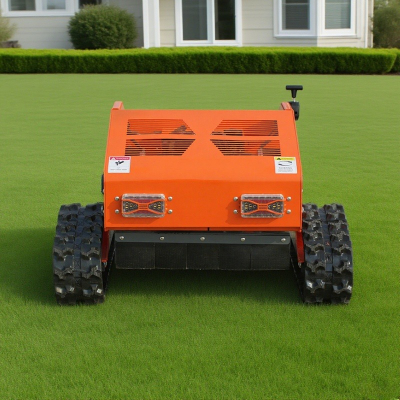
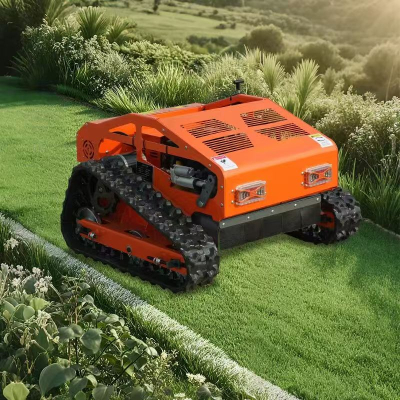
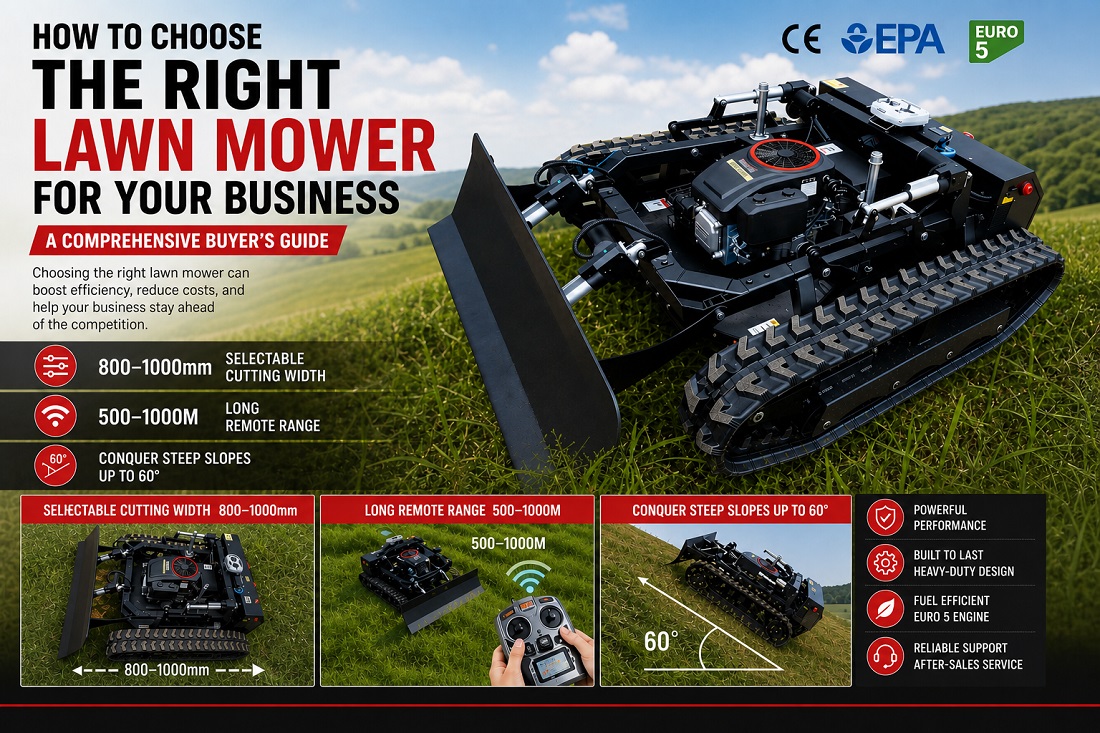
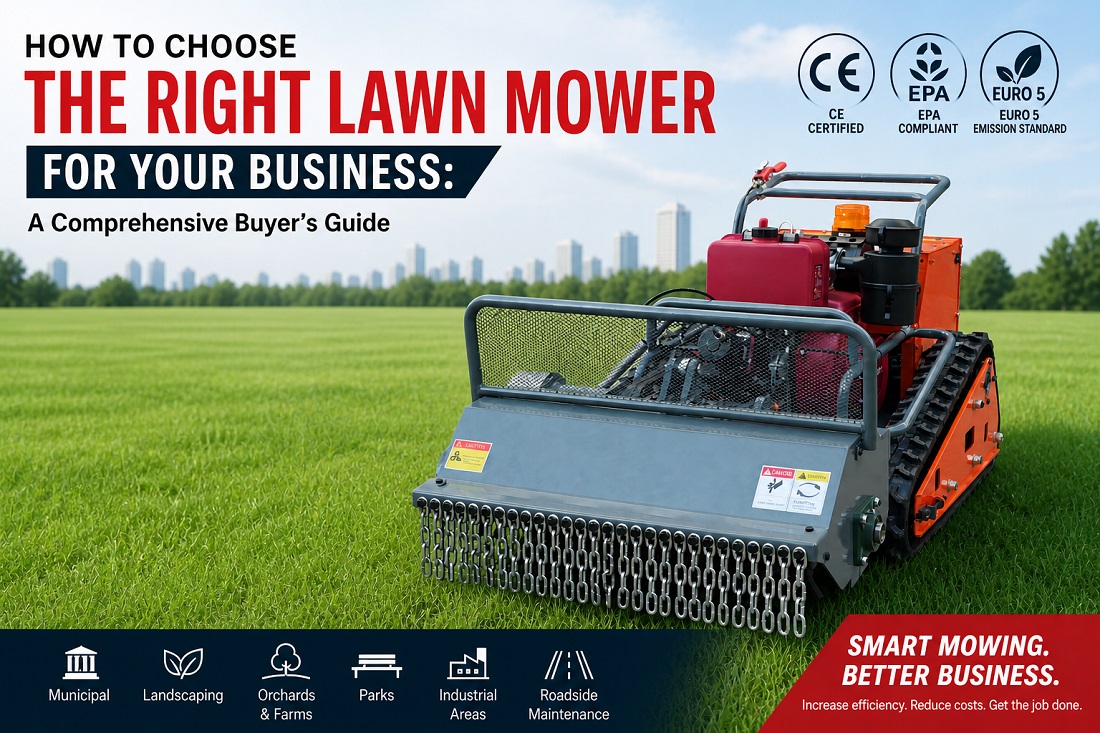
Extreme Gradients and Steep Slopes: In response to the rigorous demands of managing highway verges or reservoir embankments, it has become essential to utilize machines engineered with an exceptionally low center of gravity. Consequently, crawler-type (tracked) remote-controlled mowers have ascended to become the definitive industry standard for these environments, with certain elite professional models boasting the capacity to navigate gradients of up to 60 degrees with absolute stability, effectively eliminating the risk of catastrophic tipping.
Challenging Substrates and Muddy Ground: By utilizing engineering-grade rubber tracks instead of traditional wheels, these machines provide superior traction and distributed weight pressure on soft, saturated, or uneven soil, environments where conventional wheeled units would likely lose traction, sink, or cause significant turf damage.
Low-Clearance and Specialized Environments: For operations within densely planted orchards or beneath the structural frameworks of solar panel arrays, business owners should prioritize low-profile chassis designs that can seamlessly navigate restricted spaces, thereby drastically reducing the need for time-consuming and labor-intensive secondary manual trimming.
2. Cutting Parameters: Engineering for Maximum Operational Throughput
From a purely commercial perspective, the precision of a machine’s cutting width is intrinsically linked to the total man-hours required to conclude a project, meaning that even a marginal increase in swath capacity can yield substantial cumulative time savings over an entire fiscal year.
Identifying the Optimized Width: For the majority of large-scale commercial operations, a cutting width ranging between 800mm and 1000mm represents the "technical sweet spot," as it provides the necessary surface coverage to clear hectares with speed while remaining sufficiently compact for transport in standard service vans or utility trailers.
Dynamic Height Adjustment: Because professional maintenance tasks can vary from the precision grooming of golf course roughs to the aggressive clearing of wild, overgrown brush, it is vital to ensure that your chosen mower features remote or highly accessible electric height adjustment systems capable of managing vegetation ranging from fine turf to thick, 20cm stalks.

3. Power Systems: Balancing Raw Torque with Environmental Sensitivity
Selecting the appropriate power architecture requires a sophisticated balance between the raw torque necessary for heavy-duty clearing and the specific environmental constraints of the operating site.
Internal Combustion (Gasoline/Diesel): These systems remain the traditional cornerstone for heavy-duty, long-duration vegetation management where maximum torque is required to process thick, woody overgrowth over extended periods without the need for frequent recharging.
Pure Electric Systems: These are the ideal solution for "noise-sensitive" environments—such as healthcare facilities, educational campuses, and high-density residential complexes—where they offer significantly lower long-term operating costs and the benefit of zero localized emissions.
Hybrid Power Solutions: Representing the pinnacle of contemporary commercial design, hybrid systems utilize a gasoline engine to generate primary torque for the cutting blades while simultaneously powering an onboard generator that drives high-precision electric motors, thus providing the endurance of liquid fuel combined with the responsive control of electrical engineering.
4. Safety and Operation: Redefining Personnel Protection
In the modern landscaping industry, safety represents the most significant "hidden cost," as traditional manual mowing methods frequently involve excessive physical strain and direct exposure to environmental hazards.
Sophisticated Man-Machine Separation: Remote control technology fundamentally alters the safety landscape by allowing operators to remain in a stable, shaded, or shielded position while the machine enters potentially hazardous zones. By leveraging a 500m to 1000m remote control radius, your team can effectively clear steep slopes, wasp-infested thickets, or snake-prone brush from a safe distance, virtually eliminating workplace injury risks.
Operational Intuition and Ease of Use: Given that commercial labor turnover can be a significant factor, investing in equipment that features an one-key start system and intuitive joystick controls is essential for minimizing the training curve for new personnel, thereby ensuring that your team reaches peak operational productivity in the shortest possible timeframe.

5. Industrial Durability and High-Frequency Maintenance Protocols
A truly commercial mower is designed to withstand the rigors of being operational for eight hours a day, six days a week, and as such, it must be constructed specifically for the stresses of "High-Frequency Operations."
Structural Integrity of Chassis and Blades: When evaluating potential fleet investments, it is imperative to prioritize machines built with reinforced high-grade steel chassis and specialized, wear-resistant alloy blades, as maintaining continuous operation is critical because, in the commercial sector, "equipment downtime is synonymous with dead revenue."
Operational Versatility via Quick-Change Attachments: To maximize the utility and amortization of your capital investment, consider machines that support quick-change attachments, such as snow blowers or specialized sprayers, which effectively transform a seasonal tool into a versatile, year-round revenue generator.
Professional Selection Strategies for Commercial Success
The Geometry of Efficiency: Rather than simply purchasing the largest available mower, business owners should calculate the "Area-to-Width" ratio relative to their logistics; an 800mm mower that can seamlessly pass through every pedestrian gate on a contract is infinitely more efficient than a 1200mm unit that necessitates specialized trailers and complex site access planning.
A Holistic View of Total Cost of Ownership (TCO): While a lower initial purchase price may be tempting, equipment characterized by high maintenance requirements and frequent component failures will ultimately result in a higher TCO than a premium, high-durability machine. Therefore, always prioritize manufacturers that ensure the availability of accessible spare parts and emphasize "low-maintenance" engineering.