Top Benefits of Remote Controlled Lawn Mowers for Safety
Introduction: A New Standard for Landscape Safety
For decades, landscaping contractors, farm owners, and municipal crews have faced inherent dangers in maintaining large or challenging terrains. Operating heavy riding mowers on steep slopes risks rollovers. Walking behind machines exposes operators to flying debris, repetitive strain, and hazardous obstacles. Traditional methods, while effective, place the individual directly in the line of potential harm. The rise of the remote-controlled lawn mower represents a paradigm shift, moving the operator to a safe distance while the machine tackles the danger. This technology isn't just about convenience; it’s fundamentally redefining lawn care safety for the commercial sector.
Core Safety Benefits: Protecting Your Most Valuable Asset—Your Team
1. Eliminate Slope-Related Rollover Risks
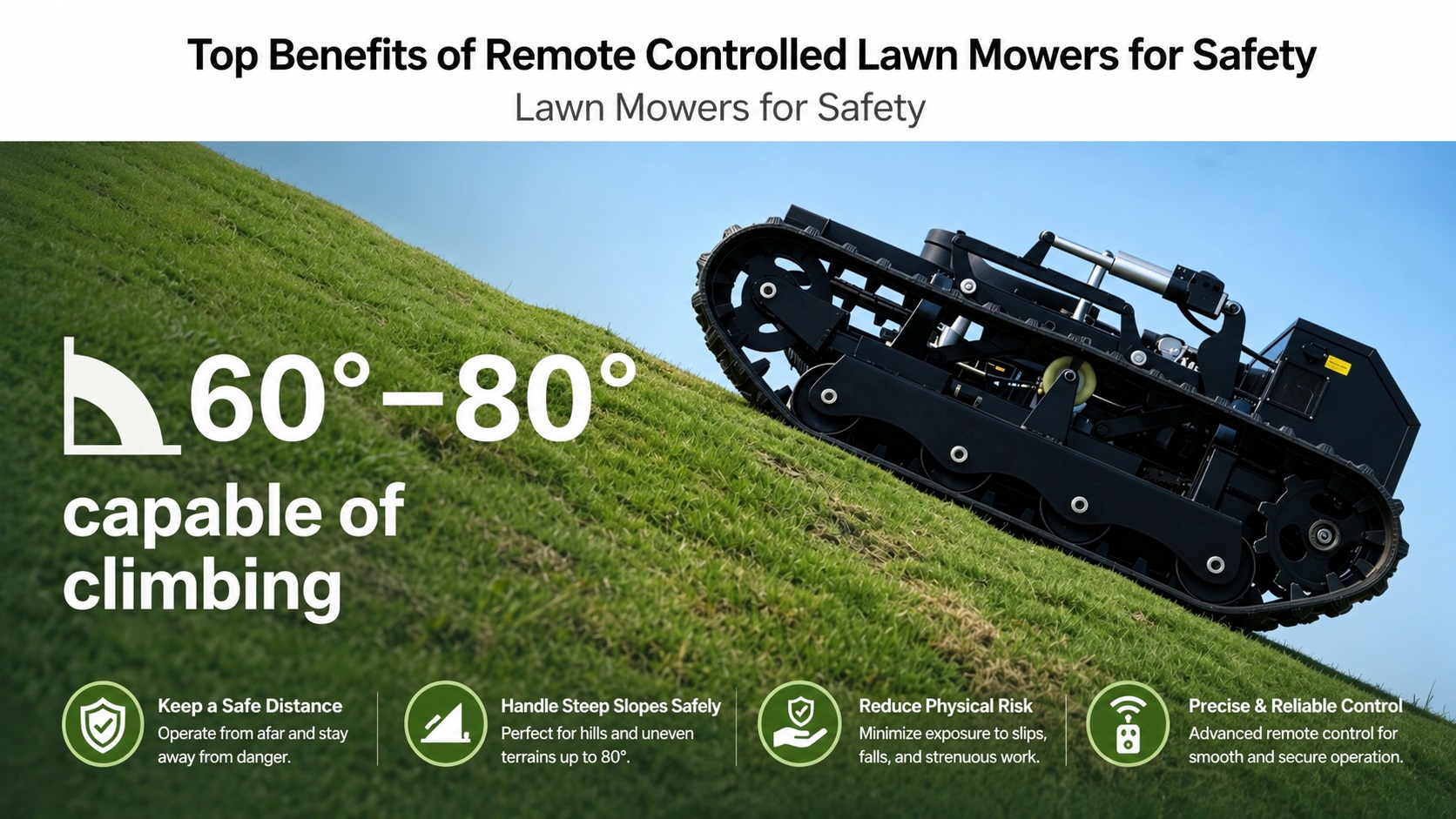
Slope mowing is one of the most high-risk tasks in commercial landscaping. A traditional riding mower can lose stability, leading to catastrophic rollovers. A remote-controlled mower removes the operator from the seat entirely. Your team can safely direct the machine from a stable, secure vantage point, completely eliminating the threat of being caught in a tipping machine. This is the single most significant safety advancement for hillside and embankment maintenance.
2. Maintain a Safe Distance from Direct Hazards
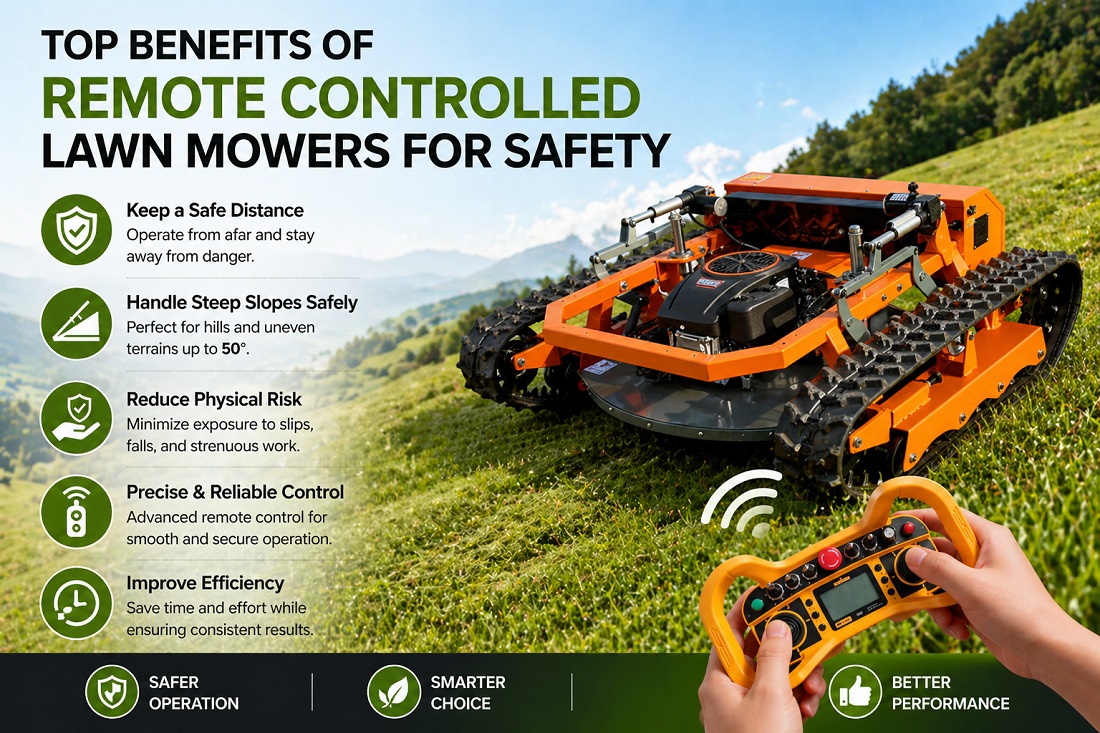
A powerful mower’s cutting deck is a zone of high-speed blades, flung objects, dust, and noise. Remote operation creates a critical buffer.
Physical Debris: Stones, branches, and other hidden objects can become dangerous projectiles. Operators are kept well out of range.
Noise & Dust: Controlling the mower from dozens of meters away significantly reduces exposure to damaging noise levels and airborne particulates.
Direct Contact: The risk of accidental slips or falls into the cutting path is reduced to zero.
3. Reduce Operator Fatigue and Physical Strain
Safety isn’t just about acute accidents; it’s also about long-term health. Navigating uneven ground with a walk-behind mower or constantly adjusting a ride-on is physically taxing, leading to fatigue, which in turn causes errors.
Ergonomic Relief: Operators work in a natural, relaxed standing position.
Mental Focus: Reduced physical strain allows for better concentration on the task and terrain ahead, promoting overall site safety.
4. Access and Assess Hazardous Terrain First
Before sending a crew in, send the machine. Remote mowers are the perfect scouts for overgrown, unseen, or unstable areas.
They can navigate wet, muddy, or soft ground that might be unsafe for a person or heavy ride-on.
They can enter dense, brushy areas that may conceal trip hazards or wildlife.
This capability allows supervisors to assess and clear dangerous zones before committing personnel.
Technical Highlights That Enable This Safety
The safety benefits are made possible by robust engineering. Key features include:
Zero-Turn Capability & Crawler Tracks: This provides exceptional, stable maneuverability on slopes and around obstacles, keeping the machine firmly planted and in precise control, which is the foundation of safe operation on complex terrain.
High-Torque Powertrains: Powerful engines deliver consistent power to handle thick grass and steep grades without bogging down or losing traction—a critical factor in maintaining predictable, safe control.
Conclusion: Safety is the Ultimate Productivity Tool
In professional landscaping, downtime from injury is the most severe cost. Investing in a remote-controlled lawn mower is an investment in your team’s well-being, your project’s continuity, and your business’s reputation. By decoupling the operator from the machine’s immediate hazards, you enable a safer, more confident, and ultimately more efficient workflow.
Ready to see how a remote-control mower can make your next slope or difficult terrain project safer and more efficient? Explore our commercial-grade remote-controlled mower series designed for durability, power, and operator safety.