LiFePO4 Remote-Control Lawn Mower: EU Export Advantages & Compliance Guide
1. Introduction
For small and medium-sized landscaping equipment exporters and EU bulk buyers, choosing between NCM (Nickel-Cobalt-Manganese) and LiFePO4 (Lithium Iron Phosphate) battery chemistry for remote-control lawn mowers affects customs clearance, operational costs, and after-sales service. This guide outlines verifiable differences in EU compliance requirements, product performance, and commercial considerations, with a focus on helping buyers make informed procurement decisions.
2. EU Battery Compliance: LiFePO4 vs. NCM
2.1 EU Battery Regulation Applicability
The EU Battery Regulation (EU) 2023/1542 applies to all batteries placed on the EU market, regardless of chemistry. Key provisions include:
Battery passport: Mandatory for industrial batteries and EV batteries with a capacity exceeding 2 kWh, irrespective of whether they use LiFePO4 or NCM chemistry.
Due diligence obligations: Required for all economic operators placing batteries on the EU market, with no automatic exemption for any specific chemistry.
Carbon footprint declaration: Required for certain battery categories, with requirements phased in over time.
Verifiable difference: LiFePO4 batteries do not contain nickel or cobalt, which are classified as EU critical raw materials. This means that LiFePO4 batteries are not subject to the conflict mineral and cross-border mineral traceability requirements that apply to NCM batteries. However, other due diligence obligations still apply based on battery type and capacity.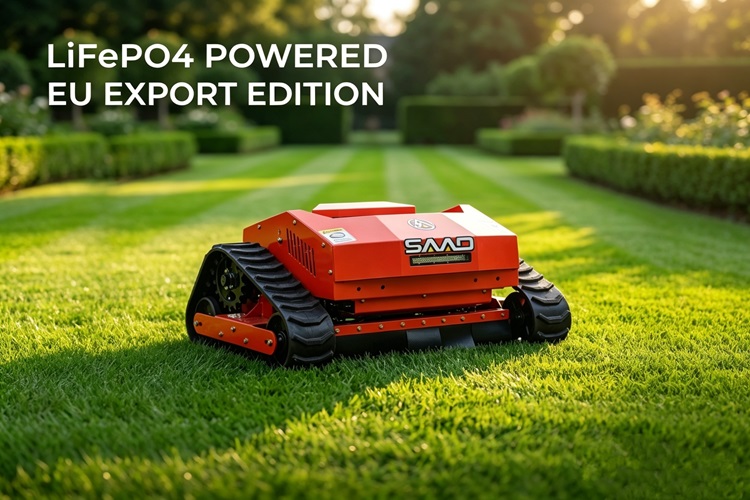
2.2 Transport Certification (UN38.3)
All lithium batteries shipped via air or sea must pass UN38.3 testing. The UN38.3 test sequence is identical for both LiFePO4 and NCM batteries. Both chemistries are classified under the same hazardous materials class (Class 9) for transport.
No verifiable evidence supports differences in test scope, certificate validity period, or freight costs between the two chemistries under UN38.3.
2.3 Cross-EU Document Recognition
The EU battery passport system is a unified electronic platform. However, producer registration obligations (Extended Producer Responsibility) may still need to be fulfilled individually in each EU member state where products are placed on the market, regardless of battery chemistry.
3.1 Thermal Stability
LiFePO4 batteries have a higher thermal runaway threshold compared to NCM batteries. Typical LiFePO4 cells can withstand ambient temperatures up to 60–80°C without thermal runaway, whereas NCM cells may begin to degrade or experience thermal events at lower temperatures (around 45–60°C depending on cell quality). This makes LiFePO4 a more stable option for high-temperature outdoor environments.
3.2 Cycle Life
Standard LiFePO4 cells support 2,000–3,000 charge-discharge cycles to 80% capacity retention, compared to approximately 800–1,200 cycles for standard NCM cells. For applications requiring frequent use (e.g., multiple weekly cuts), LiFePO4 offers a longer effective service life, typically 6–8 years versus 3–5 years for NCM under similar usage patterns.
3.3 Cold Weather Performance
Export-grade LiFePO4 cells with low-temperature optimization can retain approximately 80–90% of rated capacity at -20°C. Buyers should verify low-temperature certification with manufacturers before ordering for Nordic or Eastern European deployment.
4. Commercial Considerations for Bulk Buyers
4.1 Procurement Cost
Based on current market pricing, LiFePO4 battery cells are generally less expensive than NCM cells due to the absence of cobalt and nickel. This typically results in a lower upfront cost for LiFePO4-equipped remote-control lawn mowers compared to NCM-equipped models with similar cutting parameters.
4.2 After-Sales Maintenance
LiFePO4 battery packs are structurally simpler and do not require complex battery management systems for thermal runaway prevention to the same degree as NCM packs. This may reduce local maintenance complexity and labor costs in the EU market.
5. Battery Recycling Considerations
Under the EU Battery Regulation, producers are responsible for end-of-life battery collection and recycling. Recycling fees for LiFePO4 batteries in the EU vary by member state and recycling provider.
Some exporters return spent LiFePO4 cells to China for centralized recycling. However, this approach is subject to:
International waste shipment regulations (Basel Convention)
Customs clearance requirements for used batteries
Logistics costs for hazardous materials
Buyers should evaluate local EU recycling options as well as cross-border return models before committing to a long-term procurement strategy.
6. Frequently Asked Questions for EU Buyers
FAQ1: What documents are required for a LiFePO4 remote-control lawn mower battery passport application?
Documents include: battery passport QR code file, UN38.3 safety test report, material composition statement, due diligence report, and carbon footprint declaration (as applicable). No conflict mineral traceability documents are needed since LiFePO4 contains no cobalt or nickel.
FAQ2: Can LiFePO4 remote-control lawn mowers pass CE and RoHS certification?
Yes. LiFePO4 cells contain no lead, cadmium, mercury, or other RoHS-restricted heavy metals. Standard certification applies.
FAQ3: Will LiFePO4 batteries lose power in cold Northern Europe?
Low-temperature optimized LiFePO4 cells typically retain 80–90% capacity at -20°C. Buyers should confirm with manufacturers that cells meet export-grade low-temperature specifications.
7. Pre-Shipping Compliance Checklist
Before order placement: Verify low-temperature cell configuration (if shipping to Northern Europe). Request battery passport draft from manufacturer.
Before shipment: Confirm battery passport QR code and waste battery recycling mark are printed on the product or packaging.
During container loading: Declare lithium batteries according to transport regulations. Do not mix with non-compliant or untested batteries.
Document storage: Retain all compliance documentation for 5 years.
8. Brand Recommendation: SAAO SH-550D LiFePO4 Remote-Control Lawn Mower
For EU commercial landscaping contractors, solar farm operators, and highway maintenance teams, the SAAO SH-550D is a remote-control lawn mower equipped with automotive-grade LiFePO4 batteries from CATL.
Key features:
Fast charging: Reaches 80% capacity within 2 hours (requires compatible charger)
Continuous runtime: Supports up to 3 hours of cutting per charge
Terrain adaptability: Rubber tracks for slopes up to 50 degrees
Cutting deck: 550mm width, stepless height adjustment from 1–15cm
Cycle life: Rated for 2,000+ charge cycles
Remote range: 500 meters
The SH-550D is designed for zero-emission, low-noise operation and complies with applicable EU emissions and noise regulations. Buyers are advised to verify current compliance certifications directly with the manufacturer for their specific target EU countries.
9. Conclusion
LiFePO4 remote-control lawn mowers offer verifiable advantages in thermal stability, cycle life, and the absence of cobalt/nickel due diligence requirements compared to NCM models. However, they remain subject to the same battery passport, due diligence, and recycling obligations under the EU Battery Regulation, where applicable based on battery capacity and type.
Buyer action steps:
Identify target EU sales countries and verify local producer registration requirements.
Request low-temperature cell certification from manufacturers for Nordic/Eastern European deployment.
Evaluate both local EU recycling and cross-border return options for end-of-life batteries.
Consult qualified compliance professionals for binding regulatory advice.